Your competitors are deploying AI systems that don't just answer questions—they autonomously analyze compliance requirements across 50 regulatory frameworks, optimize supply chains through hundreds of variables, and coordinate cross-functional decisions in minutes instead of weeks. What separates enterprises achieving 10x efficiency gains from those still wrestling with chatbot pilots? The answer lies in agentic workflow architecture—and most organizations lack the implementation blueprint.
The challenge isn't accessing powerful AI models. It's orchestrating them into autonomous systems that reason, plan, and execute within your security boundaries while avoiding the vendor lock-in that compromises data sovereignty in regulated industries. As enterprise AI matures beyond proof-of-concept, the competitive gap is widening between companies that master multi-agent orchestration and those stuck with fragmented point solutions.
In this white paper, you'll discover:
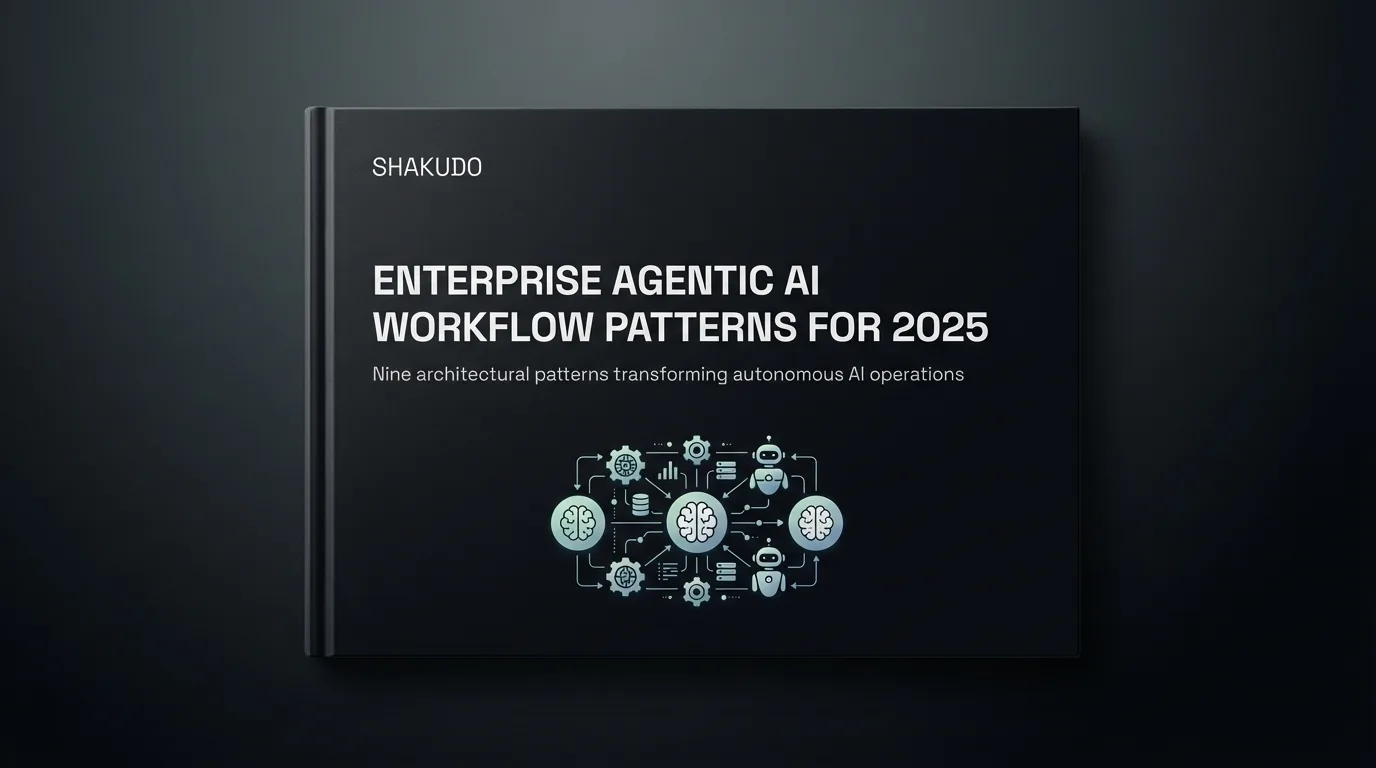
- The 9 architectural patterns proven across financial services, manufacturing, and healthcare—from basic reflection mechanisms to advanced self-optimization workflows that continuously improve their own performance
- Infrastructure orchestration blueprints for integrating language models, reasoning engines, vector databases, and monitoring systems into cohesive multi-agent systems you control
- Industry-specific implementation examples showing how enterprises deploy agentic AI for regulatory compliance, supply chain optimization, and clinical decision support with complete audit trails
- The sovereignty advantage framework for deploying sophisticated agentic capabilities within your own security perimeter—avoiding proprietary cloud platforms that create data exposure in regulated environments
Download this white paper to gain the architectural foundation your organization needs to transform AI from reactive tools into autonomous workflow systems that deliver measurable competitive advantage in 2025.