← Back to Blog

How to Use Agentic AI in Health Care

By:
No items found.
Updated on:
January 29, 2026

Mentioned Shakudo Ecosystem Components

No items found.

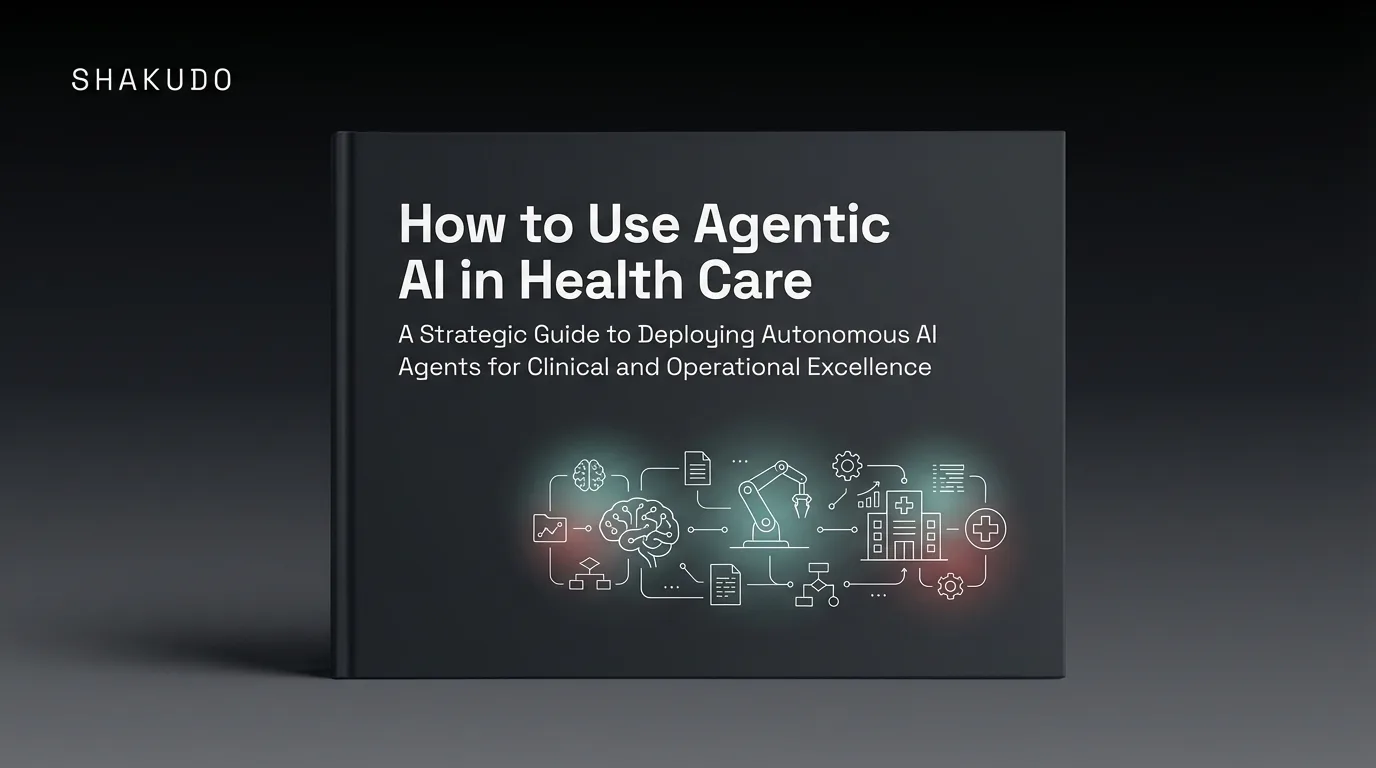
Healthcare organizations face a critical inflection point: 86% now use AI, but most solutions still require constant human oversight. What if your systems could autonomously process prior authorizations, coordinate complex care pathways, and optimize revenue cycles—without bottlenecking your already-stretched clinical teams? Agentic AI makes this possible, yet most executives struggle to identify high-ROI use cases and navigate healthcare's unique regulatory landscape.

In this white paper, you'll discover:

  • The fundamental difference between traditional AI and agentic AI—and why it matters for your operational margins and clinician burnout rates
  • Proven deployment strategies from Kaiser Permanente, Mayo Clinic, and other health systems investing $1B+ in AI transformation
  • A strategic framework for prioritizing use cases across clinical documentation, imaging, prior authorization, and revenue cycle management
  • Essential governance requirements to ensure regulatory compliance, data sovereignty, and clinical validation while accelerating time-to-production

By 2028, 33% of enterprise software will include agentic capabilities—and healthcare leaders who act now will capture competitive advantages in cost structure, quality outcomes, and workforce satisfaction. Download this whitepaper to build your roadmap for autonomous AI deployment.

See 175+ of the Best Data & AI Tools in One Place.

Get Started
trusted by leaders
Whitepaper

Healthcare organizations face a critical inflection point: 86% now use AI, but most solutions still require constant human oversight. What if your systems could autonomously process prior authorizations, coordinate complex care pathways, and optimize revenue cycles—without bottlenecking your already-stretched clinical teams? Agentic AI makes this possible, yet most executives struggle to identify high-ROI use cases and navigate healthcare's unique regulatory landscape.

In this white paper, you'll discover:

  • The fundamental difference between traditional AI and agentic AI—and why it matters for your operational margins and clinician burnout rates
  • Proven deployment strategies from Kaiser Permanente, Mayo Clinic, and other health systems investing $1B+ in AI transformation
  • A strategic framework for prioritizing use cases across clinical documentation, imaging, prior authorization, and revenue cycle management
  • Essential governance requirements to ensure regulatory compliance, data sovereignty, and clinical validation while accelerating time-to-production

By 2028, 33% of enterprise software will include agentic capabilities—and healthcare leaders who act now will capture competitive advantages in cost structure, quality outcomes, and workforce satisfaction. Download this whitepaper to build your roadmap for autonomous AI deployment.

How to Use Agentic AI in Health Care

Learn how healthcare organizations are deploying autonomous AI agents to transform clinical workflows, administrative tasks, and patient care while maintaining data sovereignty and regulatory compliance.
| Case Study
How to Use Agentic AI in Health Care

Key results

About

industry

Tech Stack

No items found.

Healthcare organizations face a critical inflection point: 86% now use AI, but most solutions still require constant human oversight. What if your systems could autonomously process prior authorizations, coordinate complex care pathways, and optimize revenue cycles—without bottlenecking your already-stretched clinical teams? Agentic AI makes this possible, yet most executives struggle to identify high-ROI use cases and navigate healthcare's unique regulatory landscape.

In this white paper, you'll discover:

  • The fundamental difference between traditional AI and agentic AI—and why it matters for your operational margins and clinician burnout rates
  • Proven deployment strategies from Kaiser Permanente, Mayo Clinic, and other health systems investing $1B+ in AI transformation
  • A strategic framework for prioritizing use cases across clinical documentation, imaging, prior authorization, and revenue cycle management
  • Essential governance requirements to ensure regulatory compliance, data sovereignty, and clinical validation while accelerating time-to-production

By 2028, 33% of enterprise software will include agentic capabilities—and healthcare leaders who act now will capture competitive advantages in cost structure, quality outcomes, and workforce satisfaction. Download this whitepaper to build your roadmap for autonomous AI deployment.

Ready for Enterprise AI?

Neal Gilmore
Request a Demo