






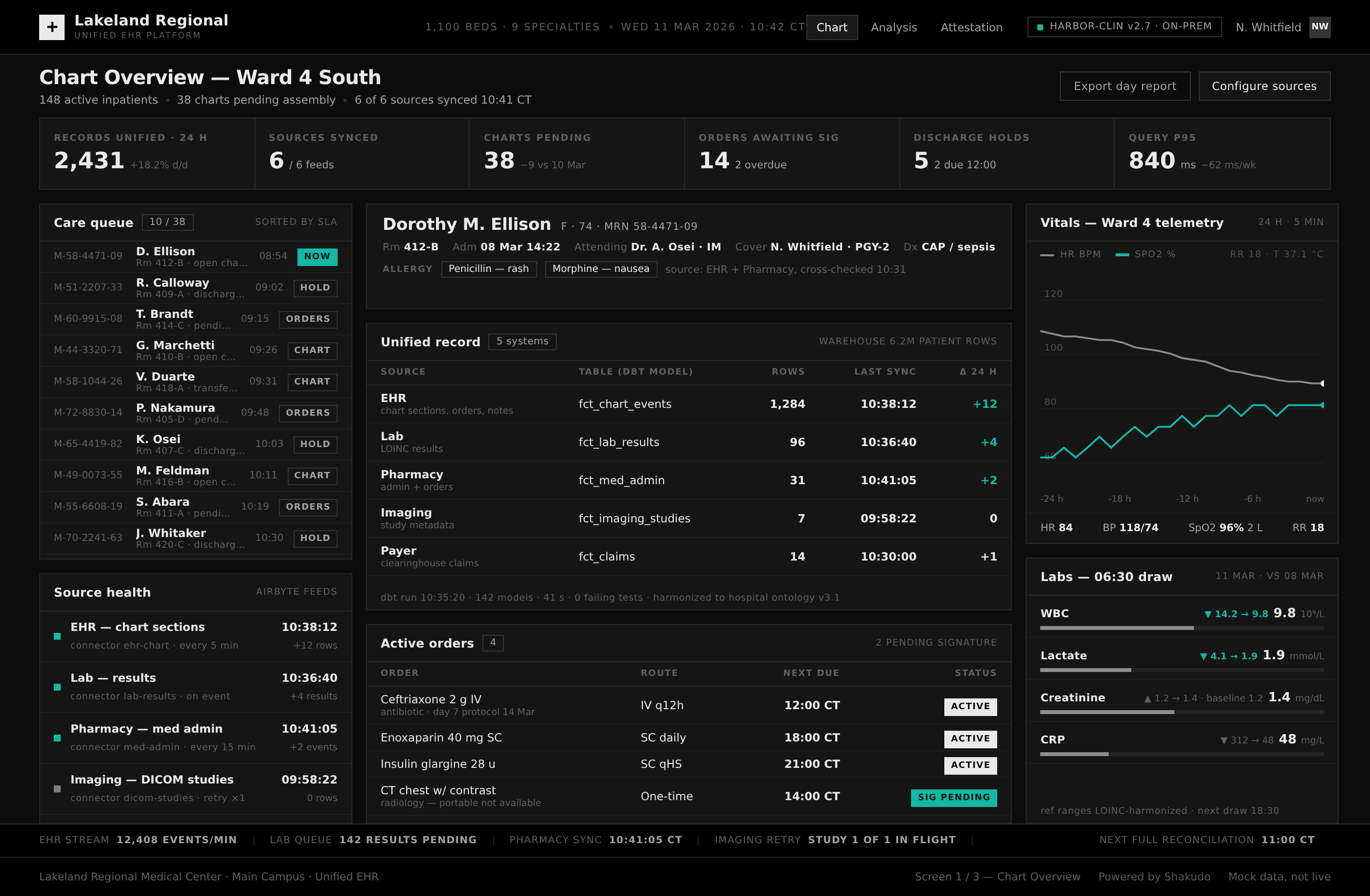
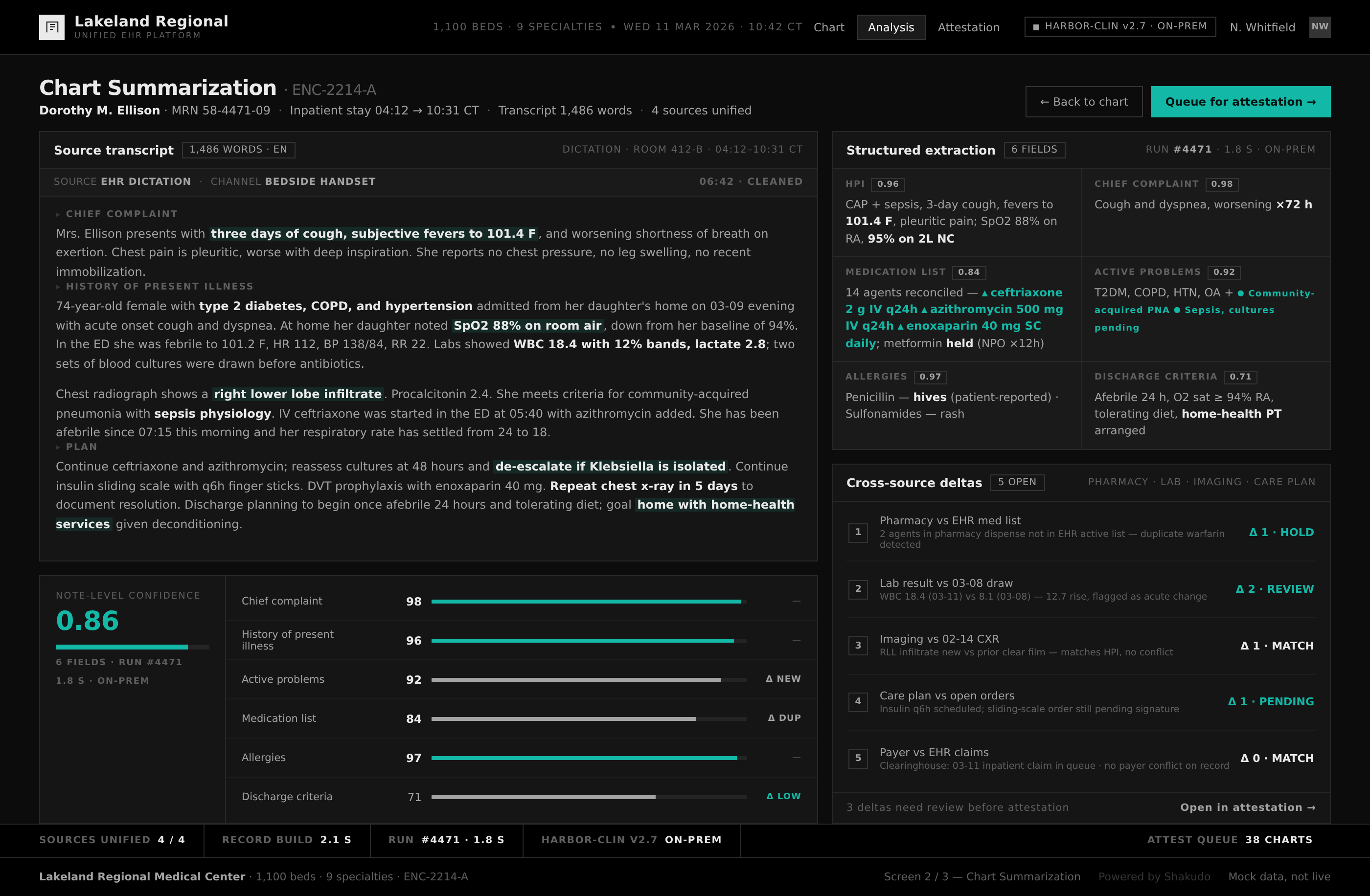
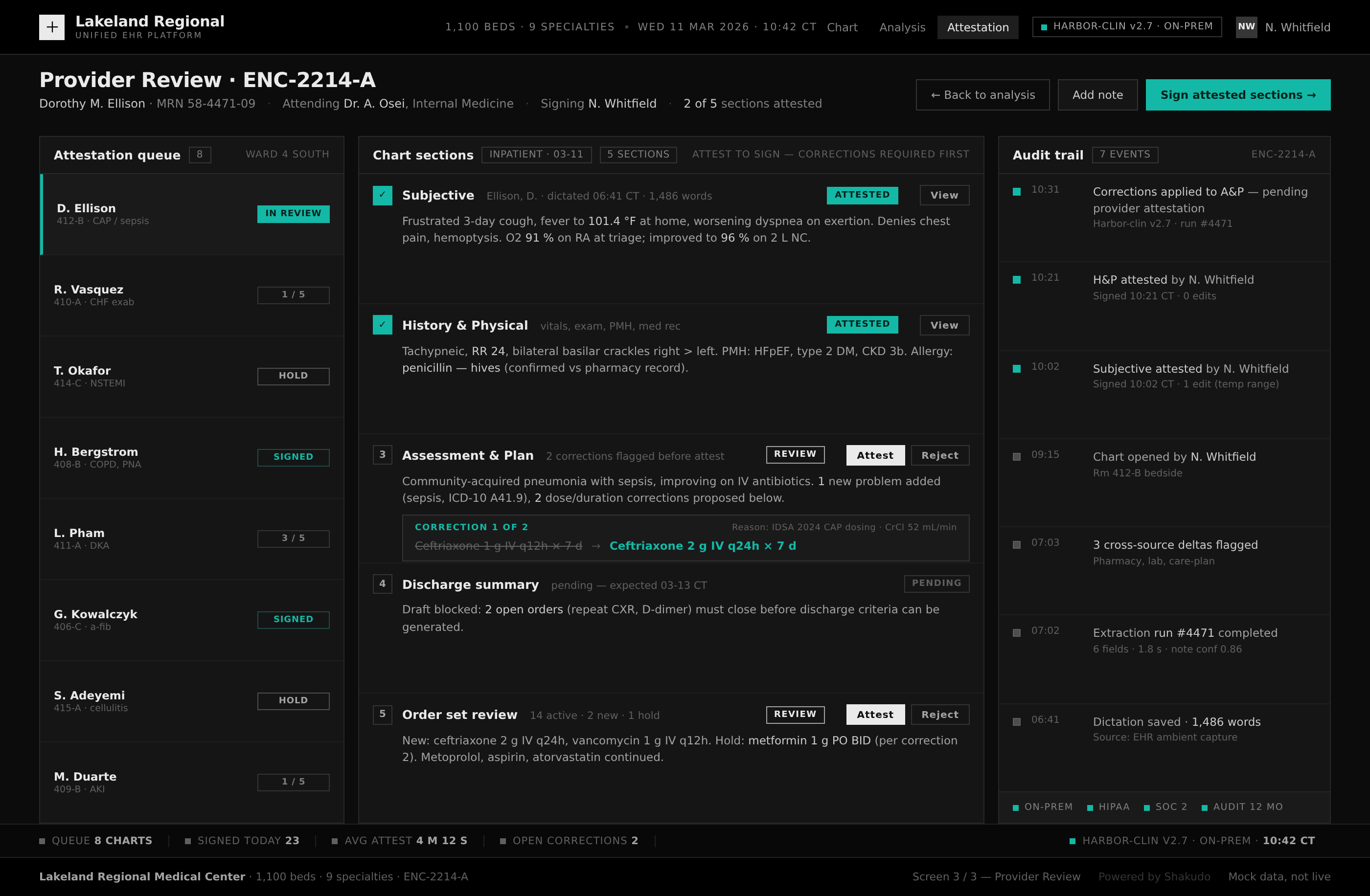
Three screens from a live chart: the overview, the AI summarization, and the provider review.
1–2 / 3
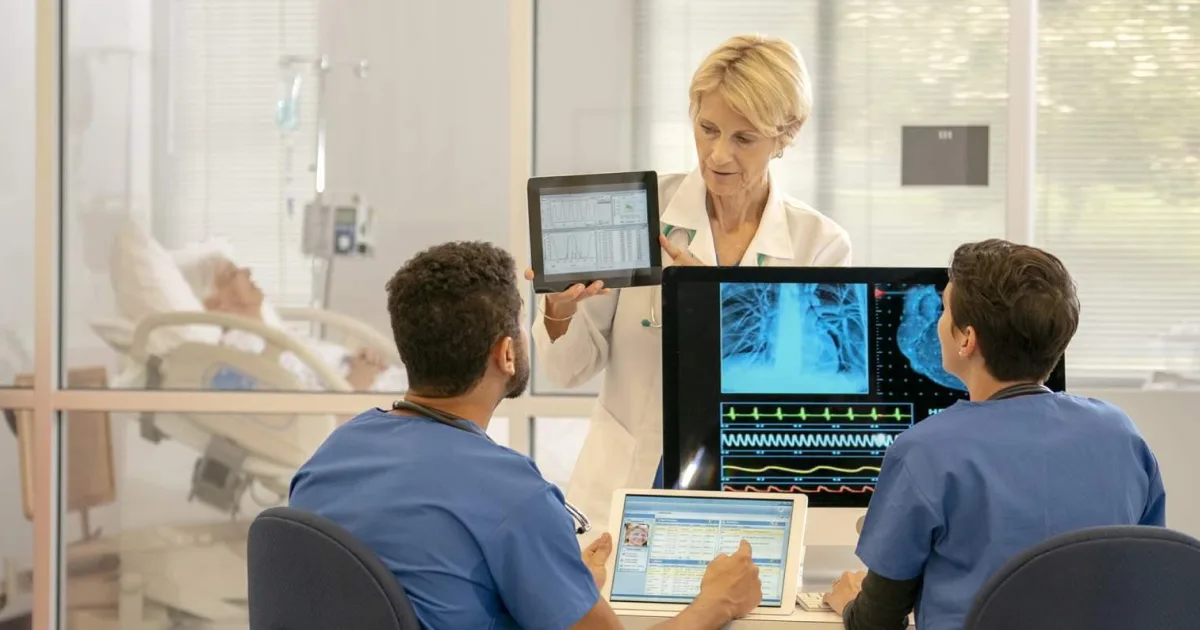
Patient data sits in a dozen systems that do not talk to each other. The EHR holds the chart. The lab holds the results. The pharmacy holds the med list. The imaging system holds the scans. A clinician who needs the full history of one patient may check four screens, pull a record by hand, and make a decision with a partial picture. Care coordination slows, and medical errors follow from gaps the clinician cannot see.
An interoperable EHR layer fixes this at the data level. It pulls patient information from every source, cleans and standardizes it, and puts the full history in one place the care team can query in plain language. Building an interoperable EHR system from scratch typically requires 1 to 2 years of development and significant resources. With Shakudo, healthcare organizations deploy this solution within weeks, and the care team works from a complete record from the first month.
Shakudo deploys a sovereign AI EHR interoperability platform that unifies patient data from every source into one governed, queryable record. Clinicians access a comprehensive patient history instantly and make more informed decisions. Care coordination improves across departments, and medical errors tied to incomplete records fall. The platform also surfaces population health trends, so care teams can plan proactive care across the population, ahead of the next admission spike.
The platform runs as sovereign AI on your own infrastructure, which is a hard requirement in healthcare. Patient information cannot leave the hospital's environment, and the platform is built around that constraint from the first component. Airbyte integrates data from the EHR, lab, pharmacy, and imaging sources into one pipeline, following the standards the systems already speak. dbt cleans, standardizes, and optimizes the data for analysis, so the record has consistent definitions of the same condition or test across systems. Dremio provides the secure, scalable data warehouse that stores and serves the patient information, with the access controls a regulated environment requires. LangChain powers the AI layer that lets clinicians and care coordinators query medical records in natural language, in plain words, and get a synthesized answer. Mattermost provides the secure, real-time collaboration channel where the care team discusses findings beside the record. The deployment takes weeks, and the organization stays ahead of evolving healthcare data standards and regulations, with the flexibility to adapt the EHR system while maintaining the security and compliance the industry requires.
Clinical operations, health informatics, and IT teams at hospitals, health systems, and post-acute providers that run multi-system environments and need the full patient picture at the point of care. The core users are clinicians and care coordinators, supported by the data and informatics teams that maintain the pipelines.
The platform runs as sovereign AI on your own infrastructure, and patient information stays in the hospital's environment for its entire life. Dremio enforces access controls on the warehouse, and Mattermost provides a secure channel for clinical collaboration. Compliance and security requirements drive the architecture, from the first component onward.
Yes. LangChain powers the natural language layer, so a clinician or care coordinator can ask a question in plain words about a patient's history and get a synthesized answer drawn from the unified record, across the EHR, lab, pharmacy, and imaging sources. The question and the answer thread in Mattermost, where the care team discusses the next step.
Shakudo deploys the solution within weeks. Building an interoperable EHR system from scratch typically requires 1 to 2 years of development and significant resources. The architecture is built to adapt as healthcare data standards and regulations evolve, so the EHR system flexes with the rules while keeping the security and compliance posture intact.
For electronic health records, that means the full patient picture at the point of care, every time. Book a demo and see sovereign AI EHR interoperability cut record work and improve care coordination.
Shakudo provides a comprehensive solution for streamlining Electronic Health Records (EHR) systems, focusing on enhanced interoperability. By leveraging advanced data integration and standardization tools, Shakudo enables healthcare providers to create a unified, accessible, and secure EHR ecosystem. This platform significantly improves data sharing across different healthcare systems, enhances care coordination, and empowers data-driven decision-making in clinical settings.










"What drew me in is simple. When developers ship production-ready code this quickly, how can I have environments spun up fast enough? Shakudo is how we close that gap."



"Shakudo does not just provide the platform. It is a real partnership. They are always there to help and execute our vision faster and the right way. It is like a co-team working together to achieve our goals."