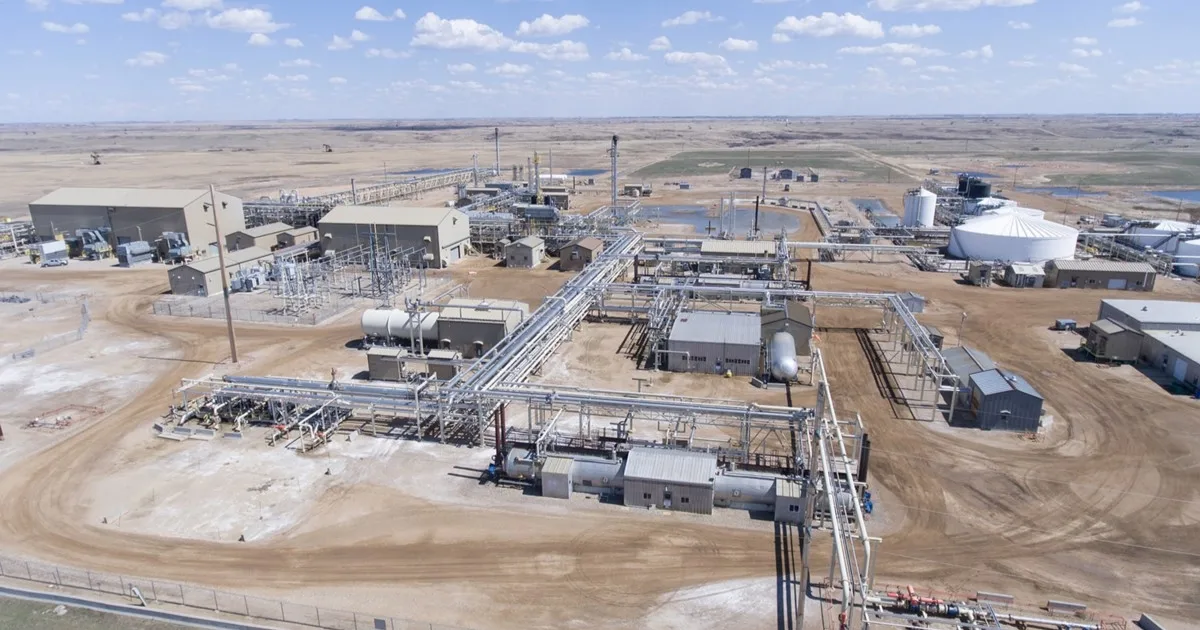







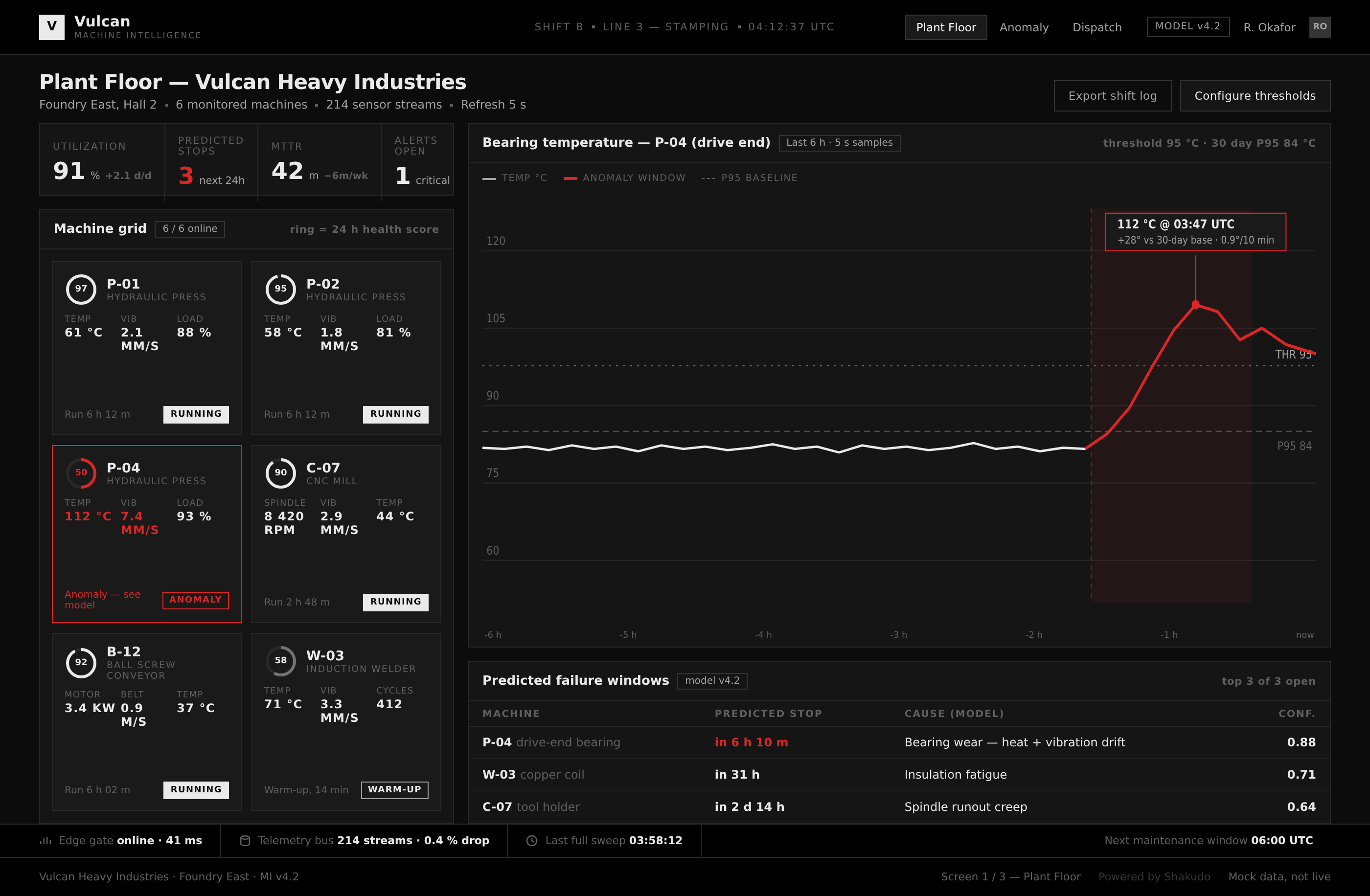
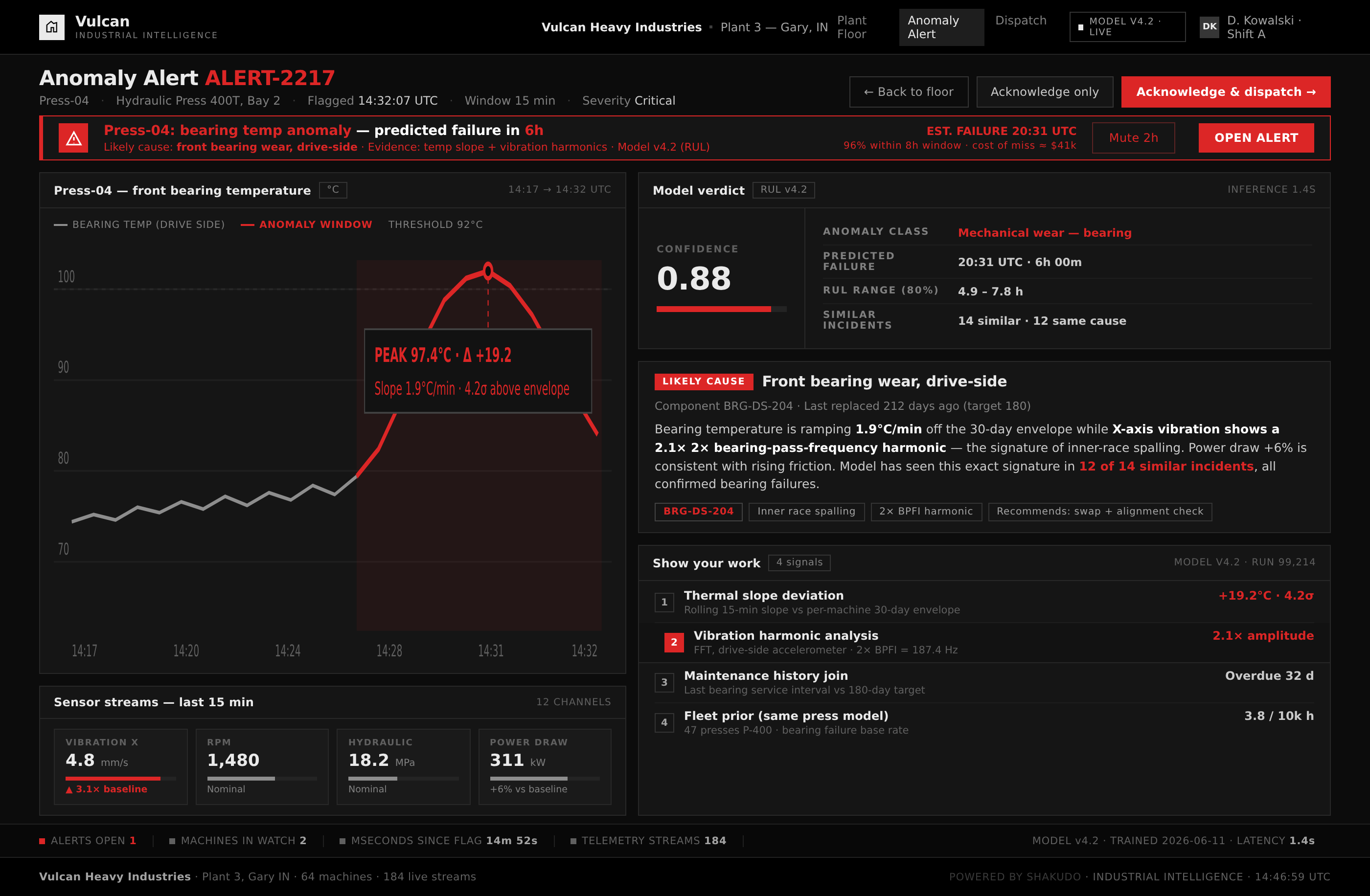
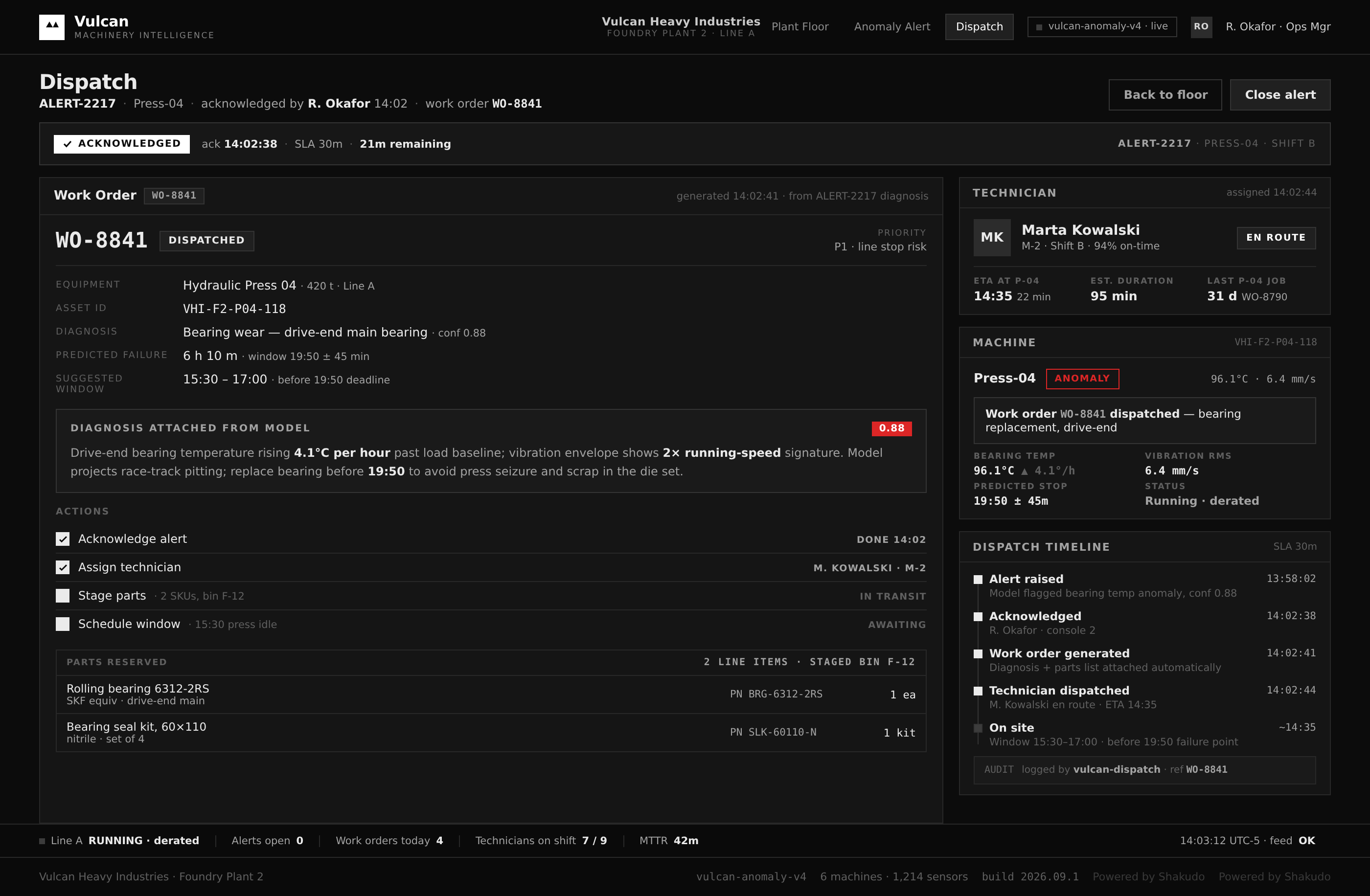
Three screens from a live run: the plant floor, an anomaly alert, and the technician dispatch.
1–2 / 3
Unplanned equipment failures cost global manufacturing an estimated $50 billion each year. When a critical compressor or pump seizes without warning, a single plant loses hours of output and racks up emergency repair bills that dwarf routine maintenance. An industrial gas producer managing machinery across multiple plants needed to see failures coming before they stopped production, rather than reacting after the damage was done.
Most plants maintain machinery on fixed schedules or wait for something to break. Calendar-based maintenance replaces parts that still have useful life, while run-to-failure guarantees unplanned outages. Neither approach accounts for the actual condition of the equipment, and the problem scales poorly.
A plant with 200 monitored assets generates thousands of sensor readings per second across vibration, temperature, pressure, and load channels. No maintenance team can watch that volume of data manually. Subtle drift in a bearing vibration signature, the kind of signal that precedes a failure by days, gets buried in noise until the machine seizes. By the time a gauge crosses a fixed threshold, the repair is already an emergency, and emergency repairs cost three to five times more than planned work once expedited parts, overtime labor, and lost output are factored in.
Shakudo builds an AI anomaly detection pipeline that learns what normal operation looks like for each piece of equipment, then flags deviations before they become breakdowns. The pipeline streams sensor data through a FastAPI backend, scores each reading against the learned baseline, and pushes alerts to a live dashboard where maintenance teams watch equipment health by asset and by plant, ranked by current risk.
The accuracy is real: deep learning approaches reach F1-scores above 0.96 on standard bearing fault datasets and classify faults with over 99 percent accuracy, and the most advanced pipelines predict remaining useful life, giving maintenance teams a window of days or weeks to plan a repair. Each alert carries SHAP-based explanations, so a technician sees that rising vibration on a compressor bearing, not a random spike, triggered the warning. The model retrains on new sensor data as equipment ages, so its baseline shifts with normal wear instead of treating every gradual change as a fault.
An industrial gas producer built a working dashboard on this pipeline in under four hours, and after deployment its teams stopped reacting to surprise failures and started scheduling repairs around the anomaly alerts. The composable architecture collapses a multi-vendor integration project into a single afternoon: a vector database for historical comparison, an autoencoder for anomaly scoring, and a dashboard builder for visualization.
The pipeline fits manufacturing and process operations that run fleets of compressors, pumps, and rotating equipment across multiple plants. It suits maintenance teams that manage hundreds of monitored assets, operations leaders who carry the cost of unplanned downtime, and engineering groups that want failure prediction on existing sensor data without a multi-month integration project or new hardware.
Deep learning models reach F1-scores above 0.96 on standard bearing fault datasets and classify faults with over 99 percent accuracy. The system assigns confidence scores to each alert and routes low-certainty cases to a human reviewer, so false positives do not swamp maintenance teams with noise. Thresholds tune to each asset, since a pump and a compressor vibrate on very different baselines.
The pipeline reads multivariate time-series data from existing sensors: vibration, temperature, pressure, and load. No new hardware is required if the plant already instruments its equipment. The models learn each asset's normal operating signature from historical data and flag deviations in real time.
Yes. A composable pipeline connecting sensor ingestion, an anomaly detection model, and a live dashboard can go live in hours rather than months. One producer built a working real-time monitoring system across multiple plants in under four hours, with alerts flowing the same day the pipeline launched.
No. It complements it. The system tells you which equipment is drifting toward failure so you can prioritize repairs based on actual condition. Scheduled maintenance still handles routine service, but anomaly detection prevents the unplanned failures that fixed schedules miss.
When the goal is to catch failures before they halt production, a conversation with Shakudo is the fastest way to see it on your own sensor data. The pipeline runs on the infrastructure you already operate, and a working monitoring dashboard is in place within days. Book a demo to watch live alerts flow.
AI anomaly detection monitors vibration, temperature, and pressure sensor streams to spot deviations that precede mechanical failure. The system flags deteriorating equipment in real time and routes alerts to maintenance teams with explanatory context, so repairs happen before breakdowns halt production.









"What drew me in is simple. When developers ship production-ready code this quickly, how can I have environments spun up fast enough? Shakudo is how we close that gap."


"Shakudo does not just provide the platform. It is a real partnership. They are always there to help and execute our vision faster and the right way. It is like a co-team working together to achieve our goals."