






Three screens from a live run: the stock board, the demand forecast, and the reorder approval.
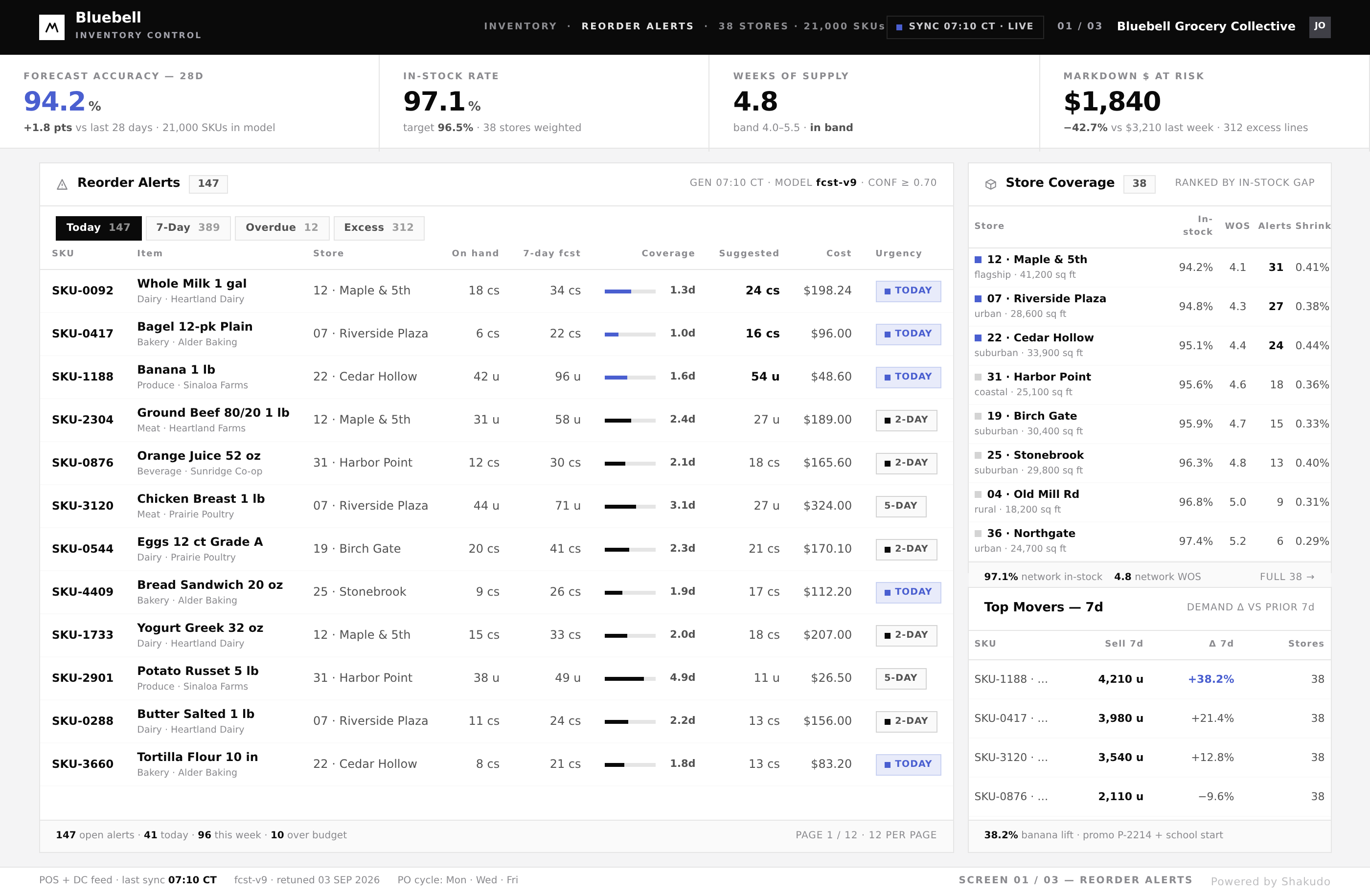
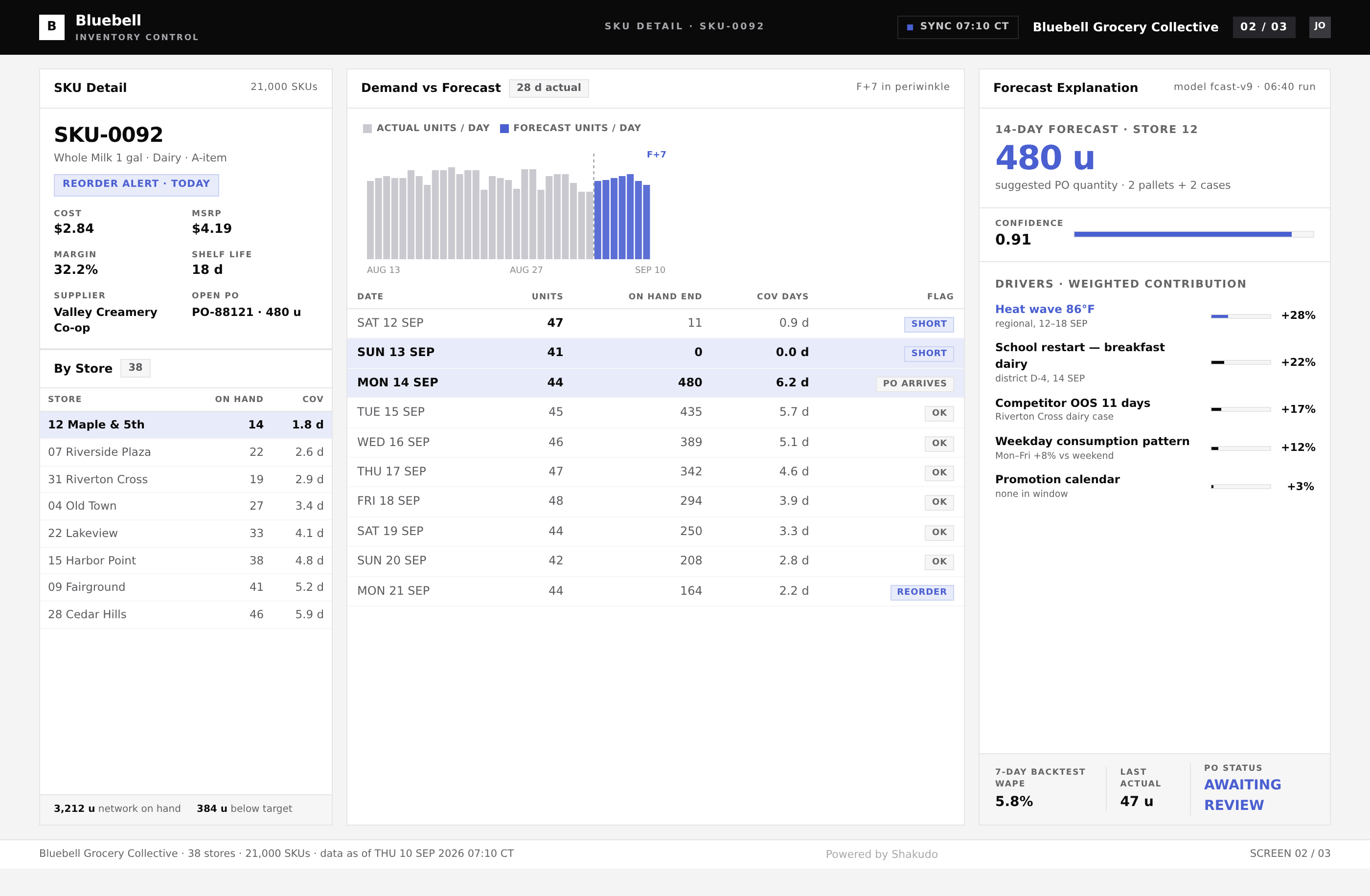
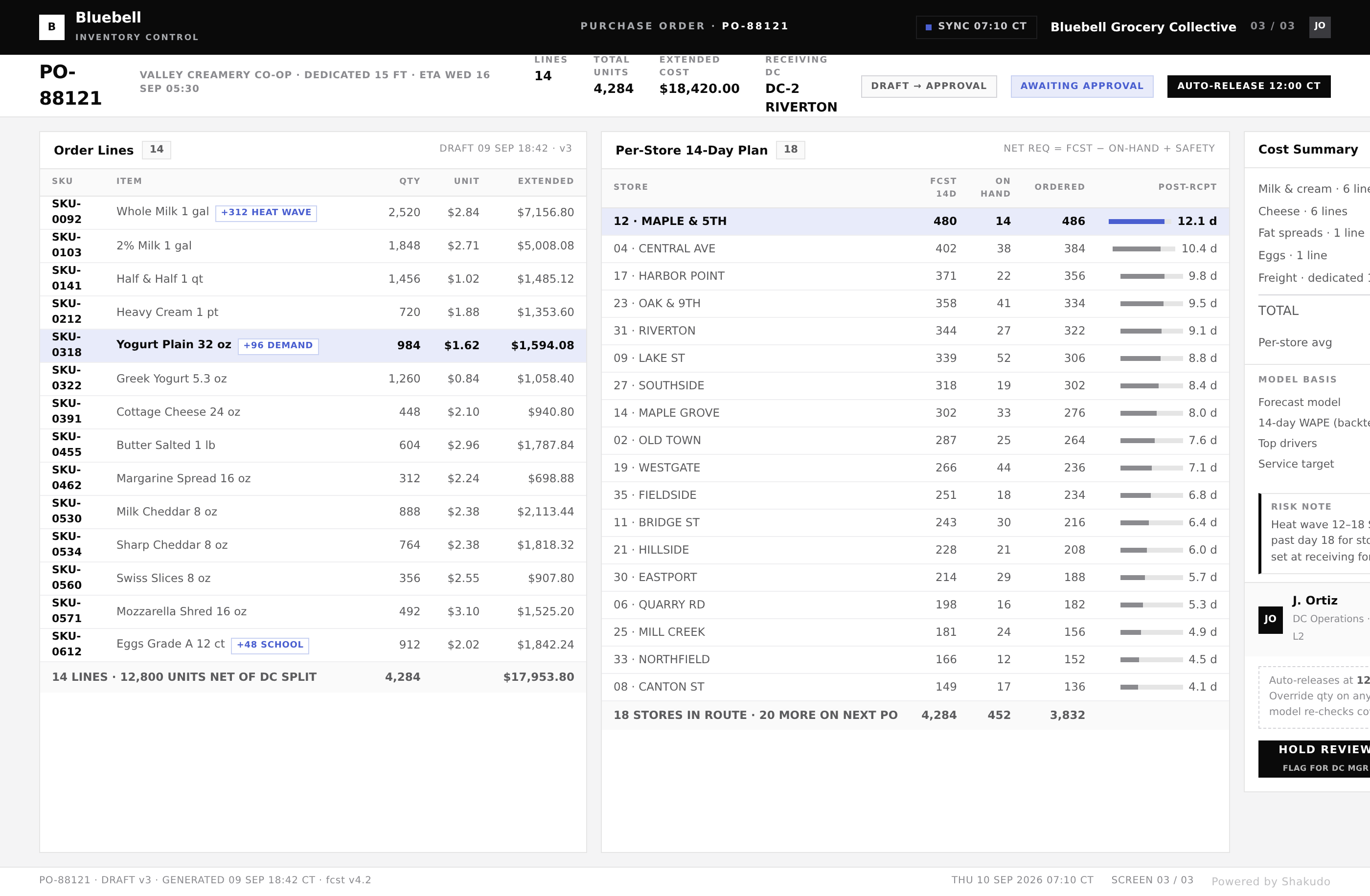
1–2 / 3
Inventory is cash that is sitting on a shelf. Too much of it and the carrying cost eats the margin, the shelf space, and the working capital that the business needs elsewhere. Too little of it and the product that should have sold is out of stock, and the customer buys from someone else instead. The teams that manage this well run demand forecasts that track what is actually selling in each location, and the teams that manage it with a spreadsheet run on last quarter's gut feel. The difference between the two is the forecast.
AI inventory forecasting is a data problem with a long tail. It needs sales history, seasonality, market trends, and the live stock position across every location, and it has to update as the day changes. Building a custom forecasting system typically takes 3 to 5 months of data work. A dedicated inventory AI stack shortens that build to weeks, and the first working forecast is live before the next stockout cycle repeats.
Shakudo deploys an AI demand forecasting system that predicts what will sell, where, and when. The model reads sales history, seasonality, and market trends together, and it accounts for the factors that a static reorder rule misses. The result is a stock level for every product and location that the team can stand behind. Overstock falls and the carrying cost comes down. Stockouts fall and the product that should sell is on the shelf. Safety stock is sized to the actual demand the model sees, which is why the service level holds without the extra buffer. Cash flow improves as the dead stock clears, and availability improves at the same time, which is the part a manual process cannot do at once.
The forecast runs on the company's own data, in the environment the company controls. Apache Kafka streams the sales and inventory events in as they happen, so the forecast reflects today's position the moment it changes. PyTorch trains the deep learning models that learn the demand pattern for each product, including the seasonality and trend that a rule-based model smooths away. Windmill orchestrates the full workflow, from the data in to the reorder recommendation out. Metabase puts the inventory levels and the predictions on one dashboard, so the team sees the position and the forecast side by side. Milvus keeps the product categorization fast, so the model can group similar products and borrow demand signals across them. The reorder points and safety stock update as the forecast updates, and the recommendation the team sees is one the model just recomputed.
Supply chain, procurement, and inventory teams at retail and e-commerce businesses where the stock position is a real cost line. It fits the operations leaders who carry the carrying cost and the service level at the same time, and the planners who want a forecast they can set the reorder point from. The stack suits a business with a meaningful sales history behind it, because the model learns from that history and gets sharper with every product it covers. It works for a single site and for a distribution network, and it scales to the catalog the business already runs.
The model learns the demand pattern from the business's own sales history, and it folds in the factors that drive it, such as seasonality, trend, and the live stock position. It runs on a schedule, and it refreshes as the sales and inventory events stream in. The output is a demand forecast for each product and location, and a reorder recommendation built from that forecast. The team reads the position and the forecast on one dashboard, and the safety stock is sized from the demand the model sees.
Demand and stock position move during the day. A forecast built on a nightly batch is already a step behind by the morning. Apache Kafka streams the sales and inventory events as they happen, so the model works on today's position. The reorder recommendation the team acts on is one the forecast just recomputed, which is what keeps the stockout and overstock both low at the same time.
Building a custom AI-powered inventory system typically takes 3 to 5 months of data engineering and modeling. On Shakudo, a functional system is operational in weeks, and the first forecast is live against the real sales history. The model starts on the products and locations the business already tracks, and it covers the rest of the catalog as the team onboards it.
For supply chain teams, that means a stock level per product and location that tracks what is actually selling. Book a demo and see AI inventory forecasting hold the service level and cut the carrying cost in the same system.

Shakudo transforms inventory management by leveraging advanced AI predictions for accurate stock level optimization. This solution integrates sophisticated machine learning models with real-time data processing to forecast demand, optimize reorder points, and minimize carrying costs. By providing a scalable platform for deploying and managing these AI-powered tools, Shakudo empowers organizations to significantly reduce overstock and stockouts, improve cash flow, and enhance customer satisfaction.










"What drew me in is simple. When developers ship production-ready code this quickly, how can I have environments spun up fast enough? Shakudo is how we close that gap."


"Shakudo does not just provide the platform. It is a real partnership. They are always there to help and execute our vision faster and the right way. It is like a co-team working together to achieve our goals."