







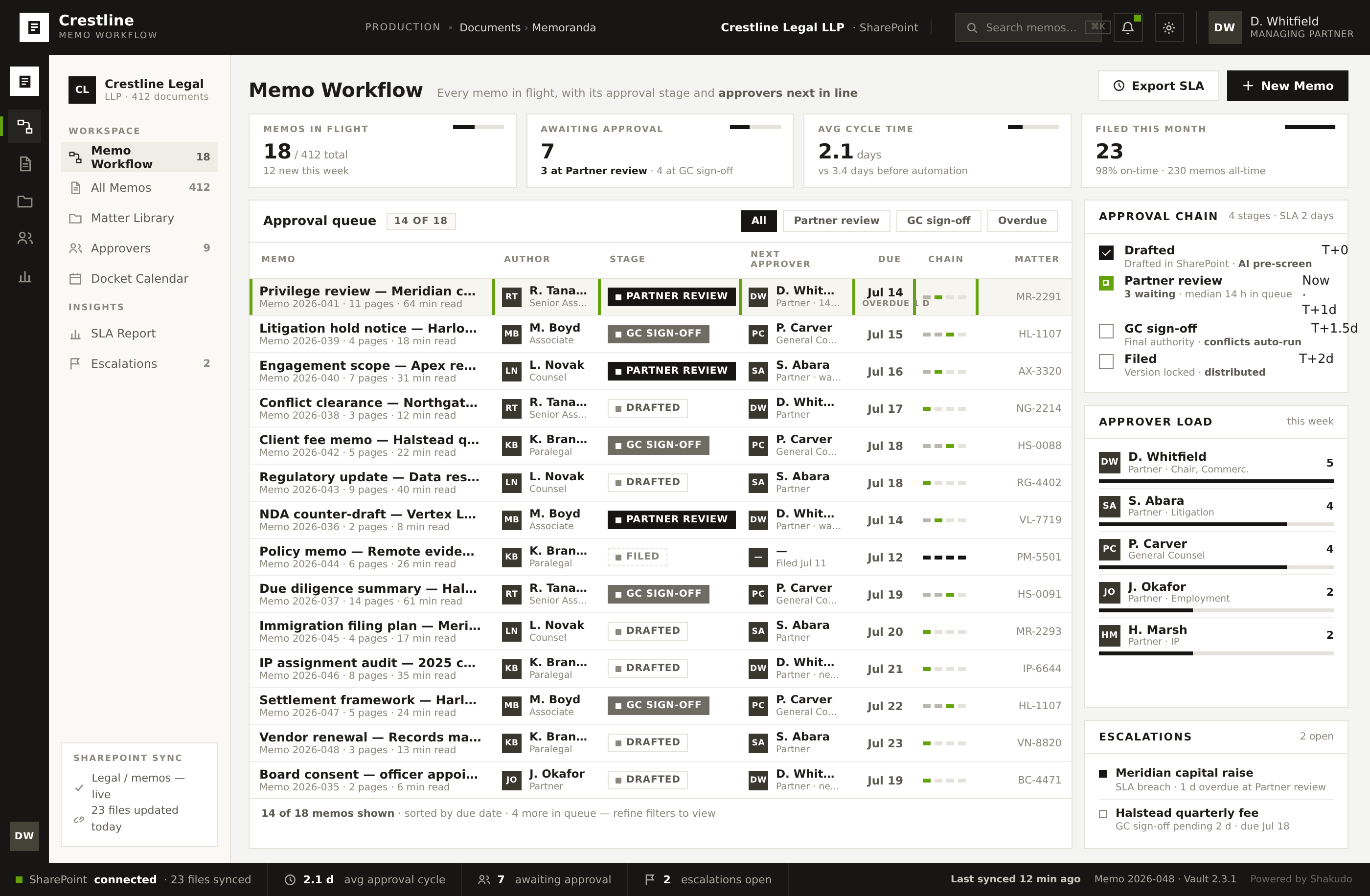
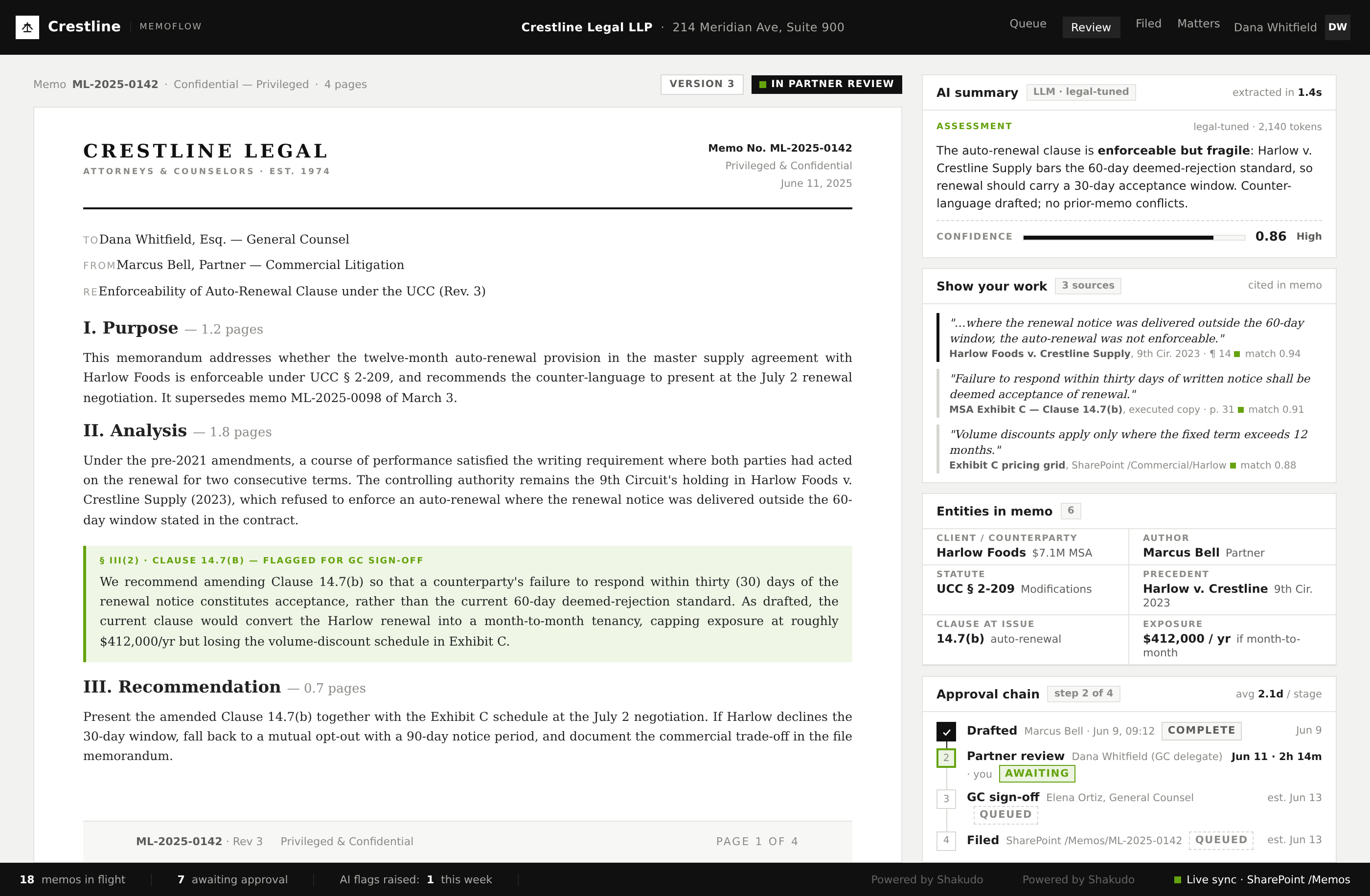
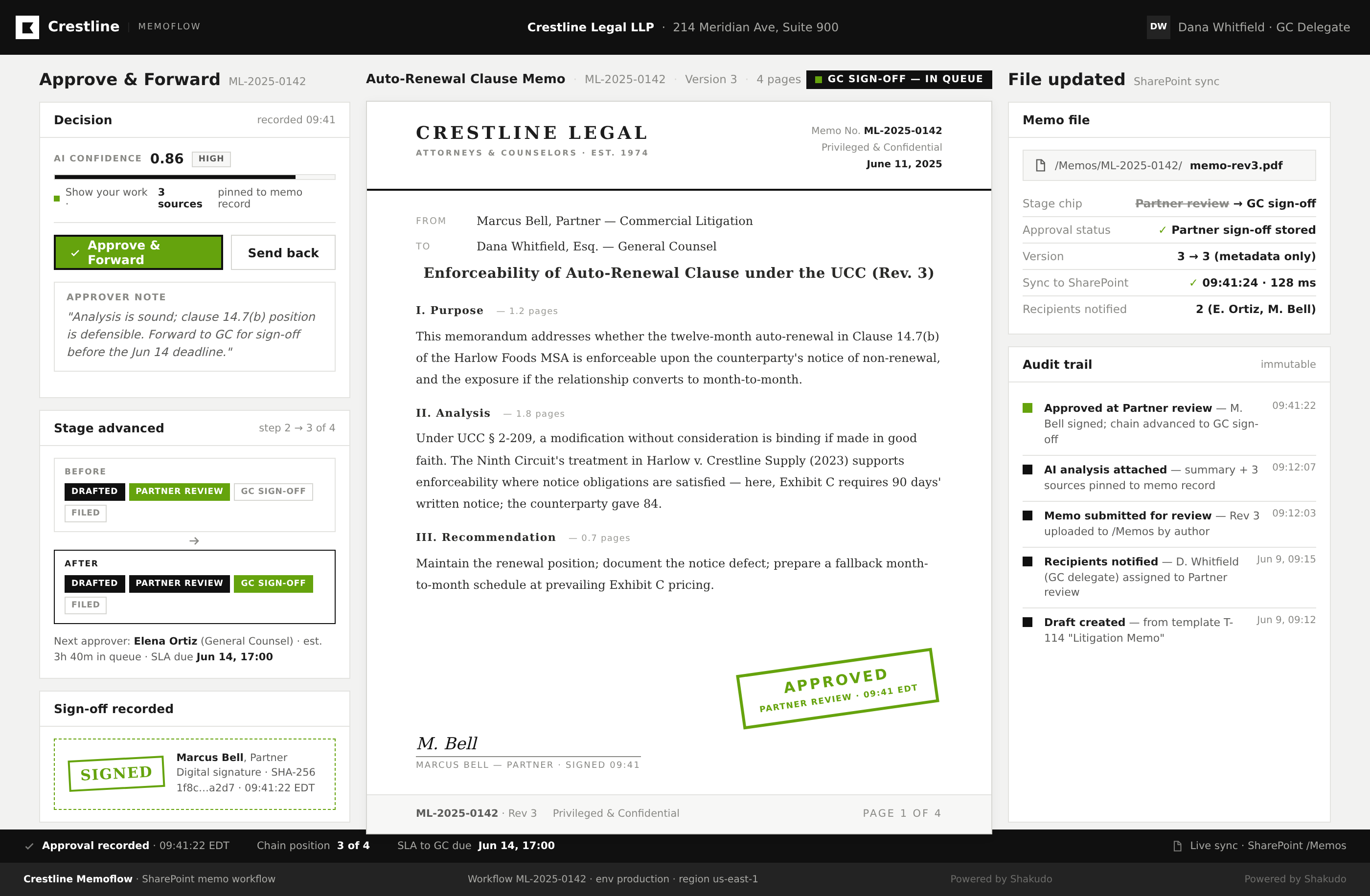
Three screens from a live run: the memo workflow board, a memo review, and the approval chain.
1–2 / 3
While a customer can submit a loan application in under a minute, the internal memo that approves it takes days. Research shows approvals account for more than 60 percent of total document processing time, and every sign-off that bounces between inboxes adds delay, version risk and compliance exposure. A memo workflow that generates the document and routes it automatically cuts that delay while keeping the full audit trail.
Financial institutions handle regulatory memos, internal policy updates and executive directives through a predictable but painful process. Someone drafts a memo in a word processor and emails it to a manager for review. The manager forwards it to legal, legal sends it back with changes, and the revised version goes to compliance. Each step takes hours or days, and nobody has a clear view of where the document sits in the chain. A memo marked urgent can sit in someone's inbox for a full day before anyone notices it.
The delays compound. A single regulatory memo can pass through five or six approvers before it reaches final sign-off, and studies of financial institution workflows show that 73 percent of finance teams lack full automation for these processes. The result is inconsistent documentation, compliance gaps and memos that arrive late. When auditors ask who approved what and when, the answers live in scattered email threads that nobody can reconstruct quickly.
Shakudo builds the workflow that removes the manual middle of memo approval. The system generates memos from predefined templates populated with structured data: a large language model reads the input parameters, selects the correct template and produces a draft that follows the firm's formatting standards. The draft lands in SharePoint with the correct metadata, permissions and version control already applied, and routing runs programmatically through a configurable approval chain that supports sequential and parallel sign-off, conditional routing and escalation rules.
The outcomes are measurable. At a financial services company that deployed this workflow, memo approval cycle time dropped by up to 70 percent: documents that previously spent three to five days bouncing between approvers now complete the full chain in under eight hours. The firm processed the same volume of memos with fewer manual hours and zero lost documents, and version control issues disappeared entirely because every revision stayed in SharePoint with full history.
Compliance teams gain a complete audit trail alongside the speed: every approver, every comment and every timestamp for any memo on demand, and every rejection and revision logged for audit purposes.
Pinecone stores the firm's policy documents and prior memos as a searchable knowledge base so generated drafts follow established conventions. FastAPI serves the API layer that connects generation and routing to SharePoint, and Streamlit provides the dashboard where teams track pending approvals, document status and escalation alerts.
The workflow fits the teams where memo volume makes manual sign-off a measurable cost: operations analysts in a financial services firm who draft and chase regulatory memos and internal policy updates, compliance staff who need a reconstructable audit trail for every approval decision, and the legal and risk reviewers who sign off on executive directives. It is built for institutions where SharePoint is already the system of record and days-long approval cycles are a documented problem.
The system uses predefined templates with structured placeholders. A language model reads input data, fills the template fields and produces a formatted draft memo that follows the firm's styling and content standards automatically. Human reviewers check the draft before it enters the approval chain.
Yes. Each memo type maps to a configurable approval chain stored as rules. Regulatory memos can route through compliance and legal, while internal policy memos can route through department heads and executive sponsors. The system supports sequential, parallel and conditional routing with escalation rules for delayed approvals.
The system writes generated memos directly to SharePoint document libraries with correct metadata, permissions and version control. Approvers review and sign off within SharePoint. All changes, comments and approval decisions are tracked automatically, and nothing leaves the firm's controlled environment.
The system routes the memo back to the originator with the rejection comments. If the issues are structural, the AI regenerates the affected sections based on the feedback, and the revised draft re-enters the approval chain at the appropriate stage. Every rejection and revision is logged for audit purposes.
When the goal is memo approvals that close in hours with a complete audit trail, a conversation with Shakudo is the fastest way to see it on your own data. The workflow deploys on your own infrastructure, on-prem or in your cloud, with a first working pipeline in place within days. Book a demo to try it.
AI generates internal memos from templates and routes them through SharePoint approval chains with automatic sign-off tracking. The solution reduces approval cycle time from days to hours while maintaining full audit trails for compliance teams.










"What drew me in is simple. When developers ship production-ready code this quickly, how can I have environments spun up fast enough? Shakudo is how we close that gap."



"Shakudo does not just provide the platform. It is a real partnership. They are always there to help and execute our vision faster and the right way. It is like a co-team working together to achieve our goals."