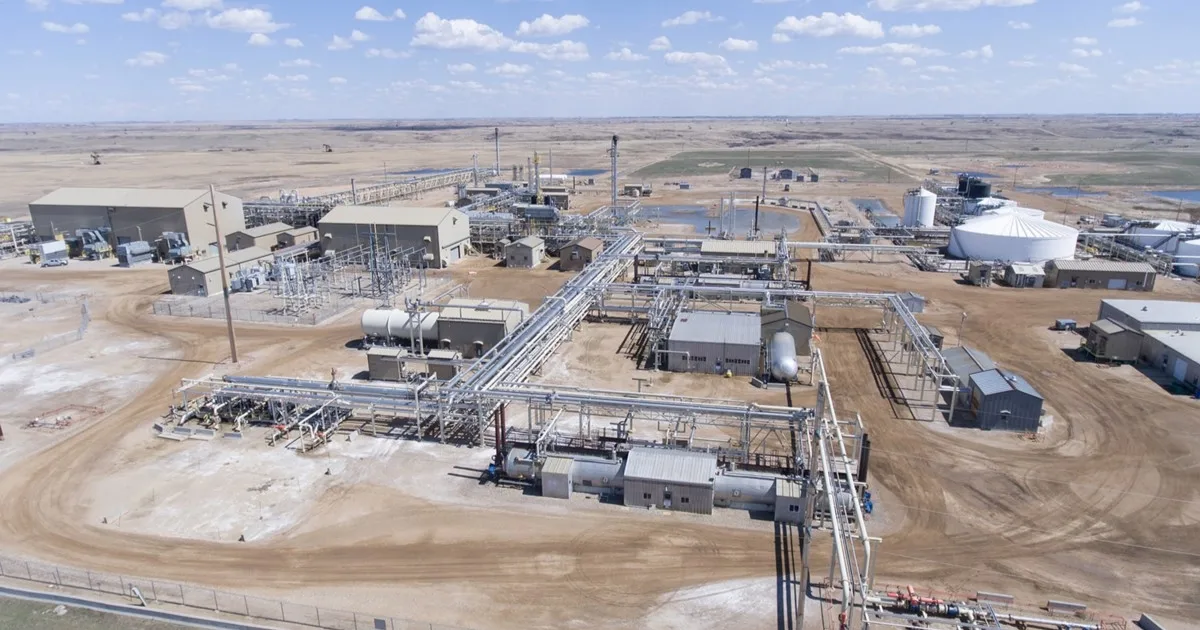







Three screens from a live reporting season: the assembly console, the source map, and the final review.
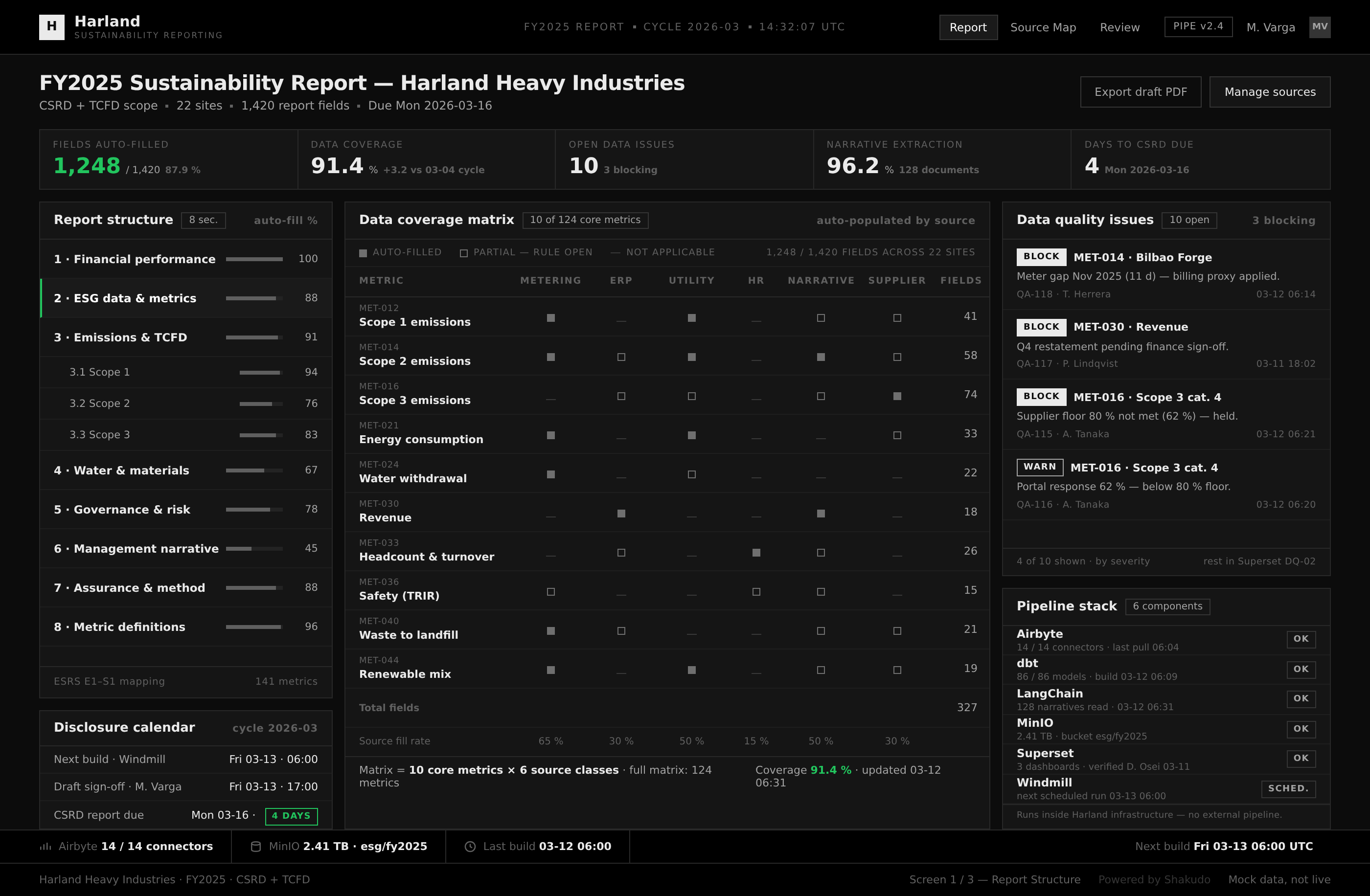
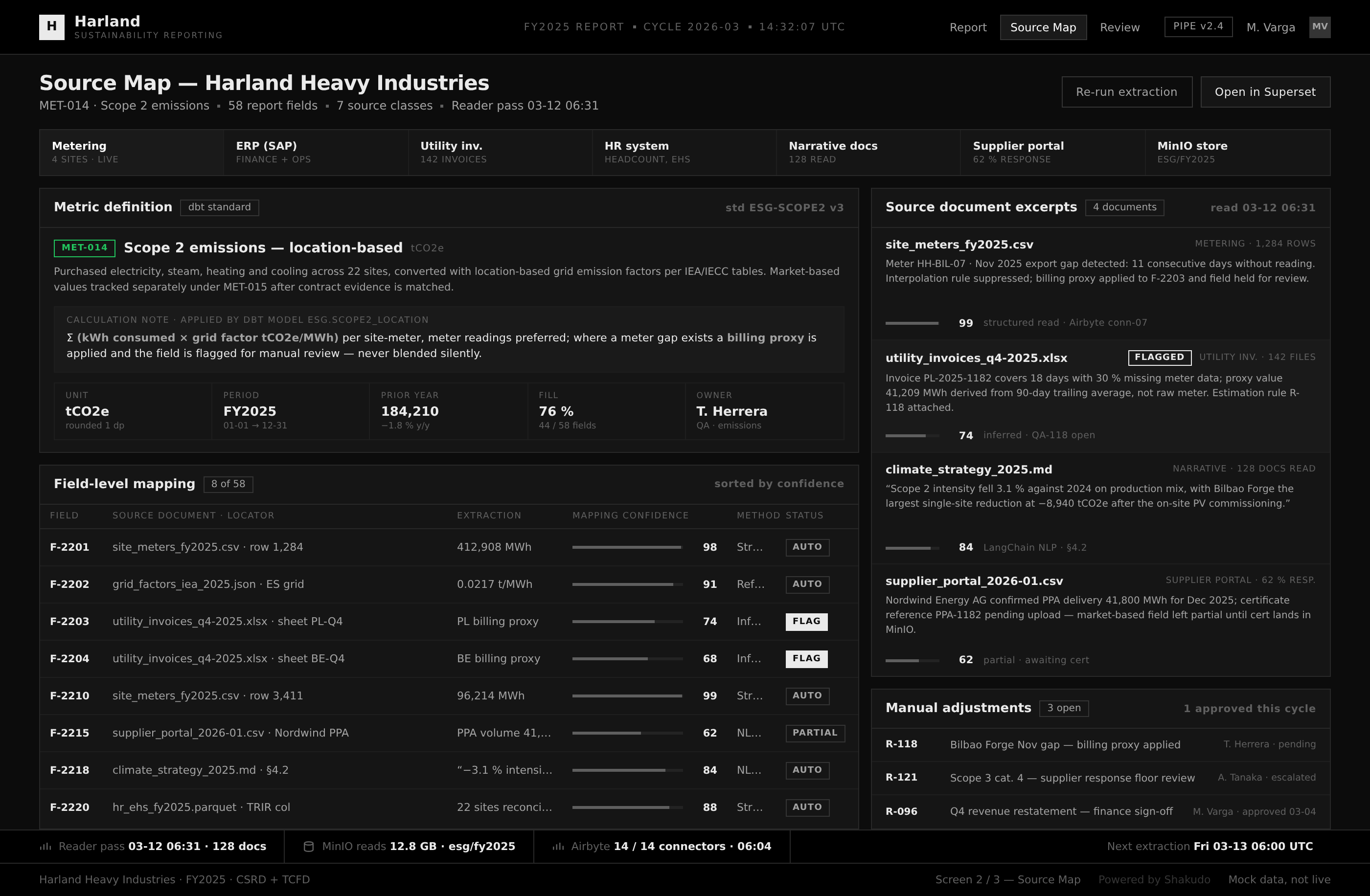
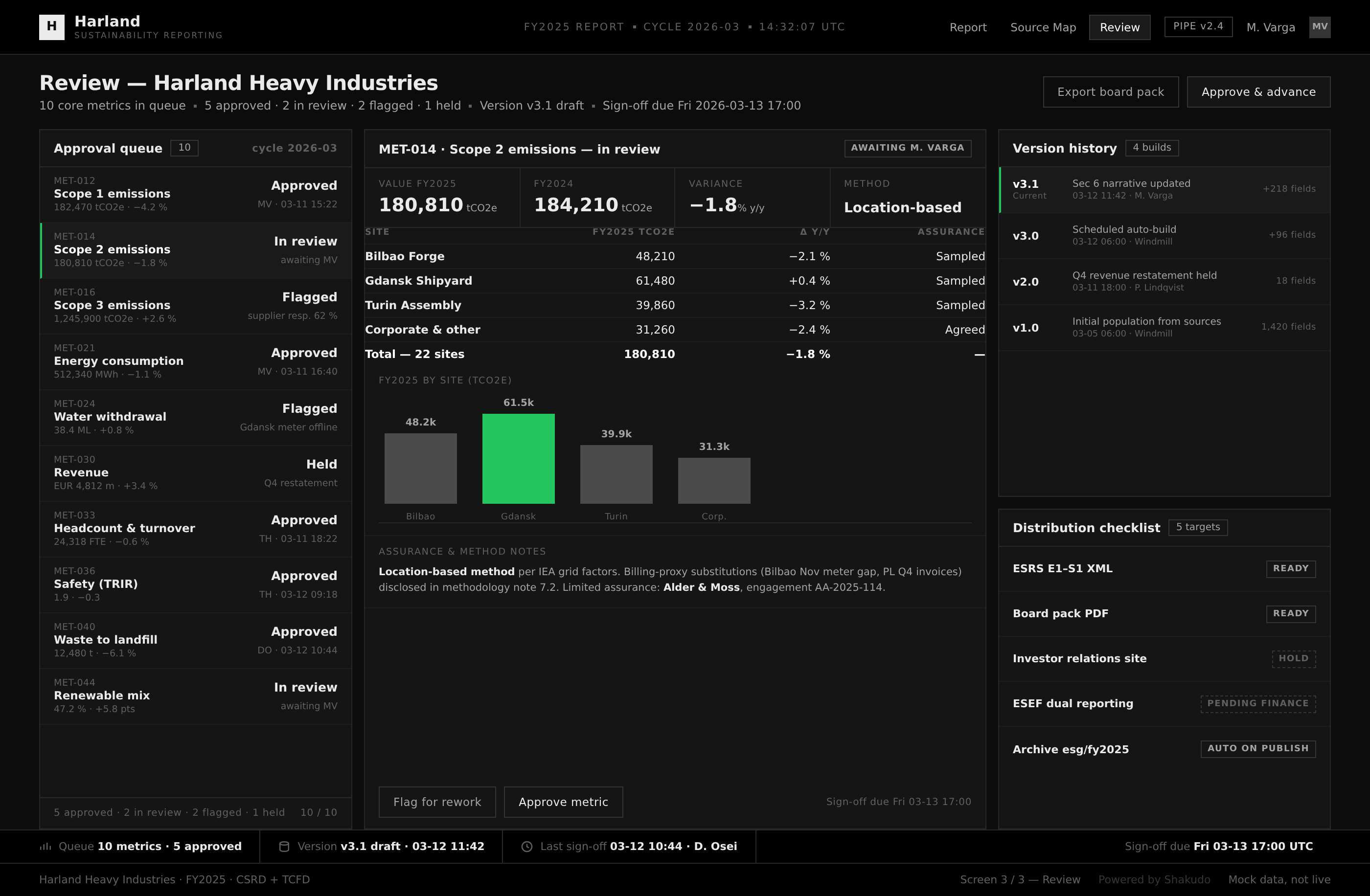
1–2 / 3
A sustainability report starts with a spreadsheet. Someone gathers emissions data from one system, revenue data from another, and narrative text from a dozen emails, then fills the report fields by hand. The report is due on a fixed calendar, the data is scattered across systems and inboxes, and every revision cycle restarts the same manual pass, with the deadline always closer than the data is ready.
Automated report population removes the manual pass. A pipeline connects the sources the company already keeps, standardizes the ESG metrics, reads the qualitative narratives, and fills the report fields from the data. The report builds itself from the source systems, on the schedule the disclosure team sets, and every field traces back to an audited source.
Shakudo deploys an ESG data aggregation and report generation system. Airbyte integrates the data from the diverse internal and external sources a company already uses. dbt transforms and standardizes the ESG metrics so every field means the same thing in every report. LangChain processes the qualitative data, reading the sustainability narratives and extracting the context a structured field needs. MinIO stores the large volumes of ESG data with the integrity and compliance controls the reporting function requires. Superset gives the team the data exploration and visualization to verify the numbers before publication, and Windmill orchestrates the whole workflow, including custom reporting schedules and automated report generation. The result is a sustainability report that populates itself, with far less manual aggregation, more consistent numbers, and the room to report more often and in more detail.
The pipeline runs in the company's own environment. ESG source data, from the metering systems to the narrative documents, stays on the company's infrastructure for the entire workflow, which matters when the data is compliance-sensitive. Airbyte pulls from the source systems on schedule, dbt standardizes the metrics, LangChain extracts the qualitative context, and Windmill triggers the report build on the disclosure calendar. The data never leaves the building, and the report fields fill from the same audited source every cycle. The output is a report draft that is complete and internally consistent, so the disclosure team spends its time on judgment calls, the narrative, and the numbers that need a human read, with the compilation handled by the pipeline.
Sustainability, ESG, and investor relations teams that produce custom sustainability reports on a fixed disclosure calendar. Financial services firms and any reporting organization whose ESG data lives across many internal systems fit best, along with teams under regulatory pressure to report more frequently and with more detail, and boards that want the numbers to reconcile across every document.
Airbyte integrates data from the diverse internal and external sources a company already keeps, from emissions and metering systems to financial and operational databases. dbt standardizes whatever arrives, so the report fields stay consistent no matter where the data comes from. A new source joins the pipeline as a connector, and the report fields it feeds appear in the next cycle.
LangChain applies natural language processing to the qualitative data. The AI reads the sustainability narratives, extracts the context and the numbers embedded in the prose, and feeds both into the report fields alongside the structured metrics.
Setting up a robust ESG reporting system by hand typically takes several months of development and integration. Shakudo deploys the full pipeline, from source connectors to scheduled report generation, within weeks.
For teams that fill sustainability reports by hand on a fixed calendar, automated population turns the cycle into a scheduled pipeline. Book a demo and see a custom report populate from live source data.
Shakudo offers a comprehensive solution for automating the creation of custom sustainability reports. By integrating diverse data sources and leveraging advanced analytics, this platform enables organizations to efficiently collect, validate, and synthesize ESG metrics. Shakudo's unique approach streamlines the entire reporting process, ensuring accuracy and consistency while significantly reducing the time and resources typically required.










"What drew me in is simple. When developers ship production-ready code this quickly, how can I have environments spun up fast enough? Shakudo is how we close that gap."



"Shakudo does not just provide the platform. It is a real partnership. They are always there to help and execute our vision faster and the right way. It is like a co-team working together to achieve our goals."