
Your legacy APIs aren't just technical debt. They're repositories of battle-tested business logic, refined over years of production use. Yet they're trapped in architectures built for a world that no longer exists, a world where systems waited for explicit instructions rather than reasoning about context and making autonomous decisions.
Maintaining legacy systems built on outdated technologies consumes up to 70% of total IT spending, with enterprises losing approximately $370 million per year on average due to outdated technology. But here's the paradox: traditional point-to-point legacy integration methods are ill-equipped for diverse endpoints spanning cloud, mobile, and web, becoming expensive and posing operational risk as a single point of failure, while full modernization exercises entail significant investment of time and costs.
The answer isn't abandoning these APIs. It's transforming them into intelligent agents that can reason, adapt, and execute autonomously.
40% of enterprise applications will be integrated with task-specific AI agents by 2026, up from less than 5% in 2025, with agentic AI projected to drive 30% of enterprise application software revenue by 2035, surpassing $450 billion. This isn't just another technology trend. It represents a fundamental shift in how systems interact.
Traditional APIs are deterministic. They receive structured requests, execute predefined operations, and return predictable responses. AI agents, by contrast, operate in uncertainty. They parse natural language, make contextual decisions, and coordinate multi-step workflows across systems. Legacy infrastructure built decades ago was not designed to support autonomous AI agents, resulting in systems that are brittle, expensive, and slow, requiring AI as smart middleware to translate between modern agent interfaces and legacy systems.
The integration challenge is profound. 87% of IT leaders rate interoperability as very important or crucial to successful agentic AI adoption, as agents must integrate with CRMs, ERPs, ticketing systems, and proprietary databases to access data and trigger workflows that deliver value.
The Strangler Pattern, introduced by Martin Fowler in 2004, offers a proven approach to incremental modernization without the risk of big-bang replacements. Applied to API-to-agent transformation, it enables you to wrap legacy endpoints with intelligent agent layers gradually, preserving business logic while adding autonomous capabilities.
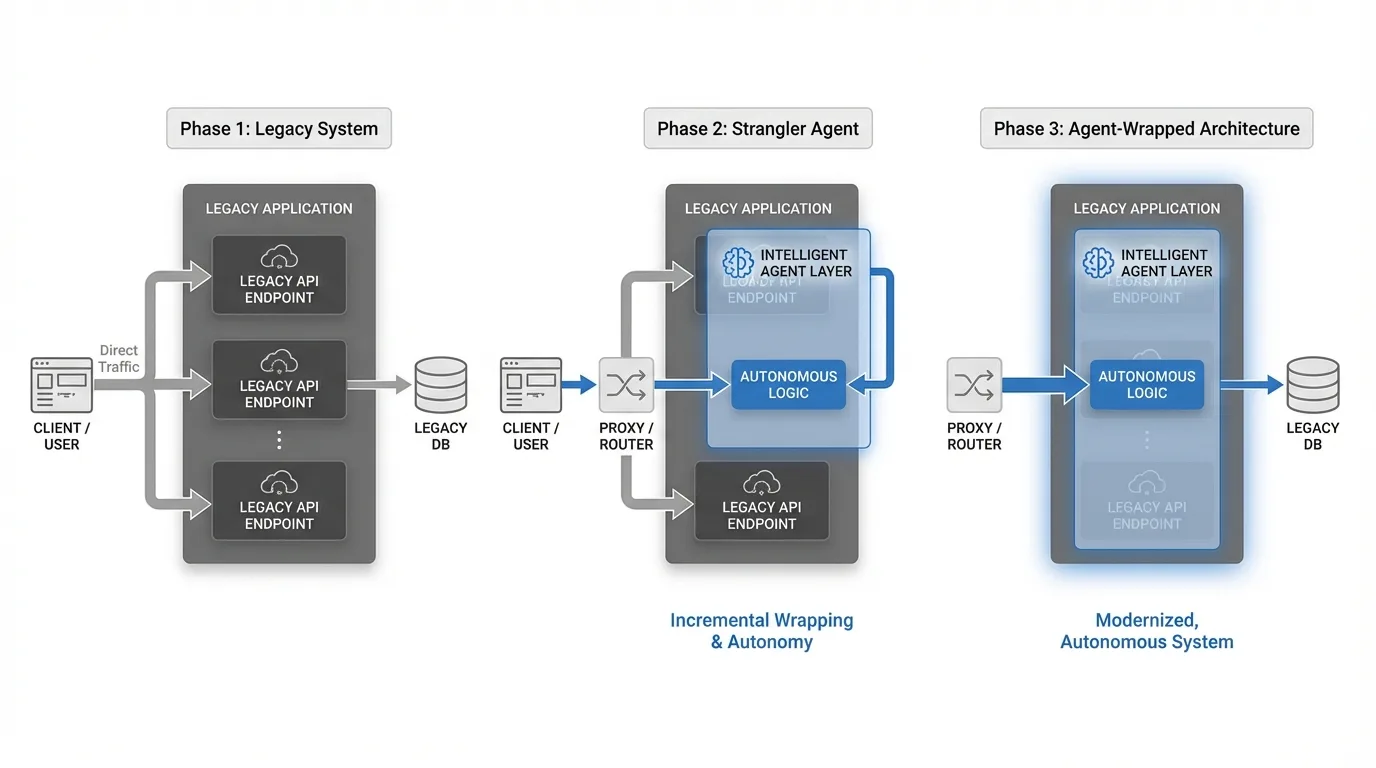
Here's how it works in practice:
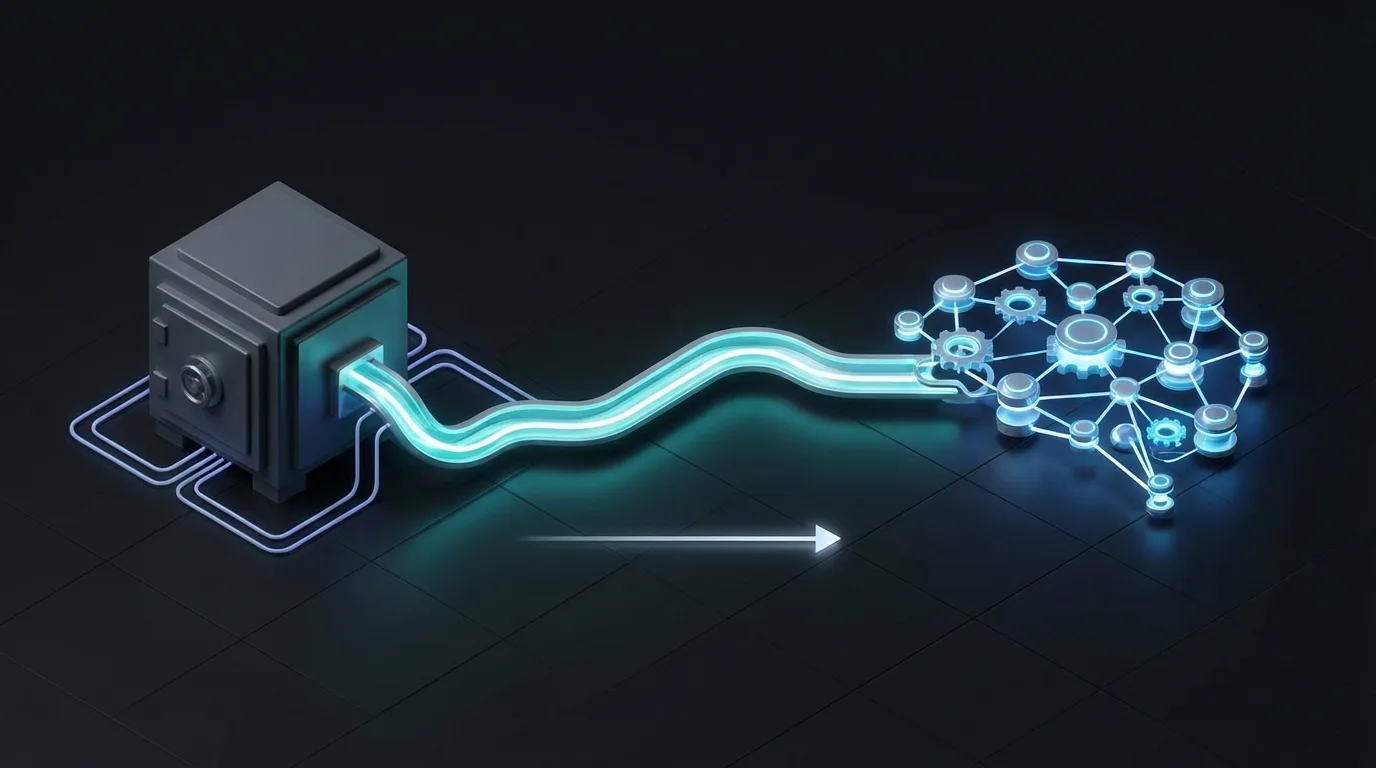
Phase 1: Transform - Identify a high-value API endpoint or service module. Create an agent wrapper that sits between callers and the legacy API. MCP, which saw broad adoption throughout 2025, standardizes how agents connect to external tools, databases, and APIs, transforming what was previously custom integration work into plug-and-play connectivity. Your agent wrapper uses Model Context Protocol (MCP) to expose the legacy API as an AI-accessible tool, complete with natural language descriptions and semantic context.
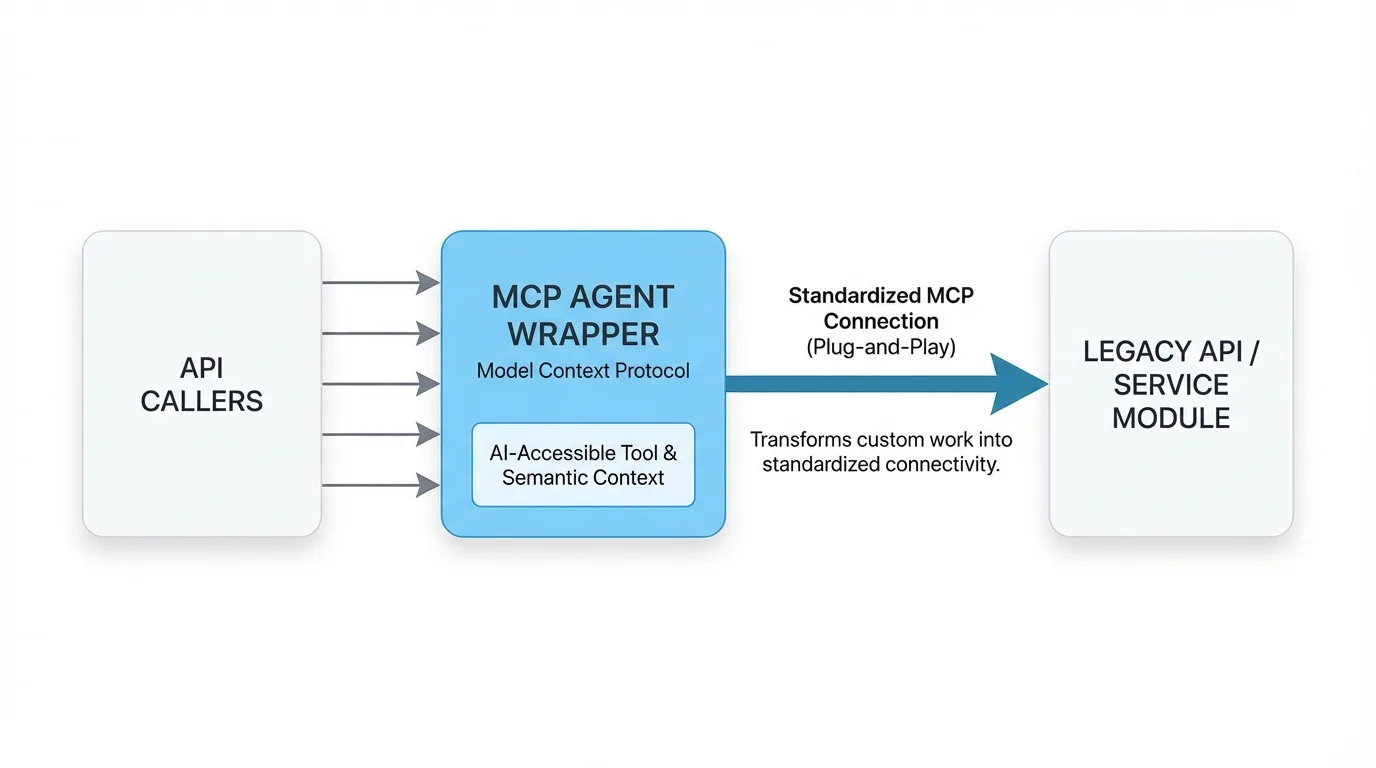
Phase 2: Coexist - Deploy the agent wrapper alongside the existing API. Route specific use cases (particularly those requiring reasoning or context awareness) through the agent layer, while deterministic integrations continue using the legacy API directly. Each extracted microservice can immediately leverage modern architectures, deployment practices, and technology stacks, dramatically reducing risk by limiting the scope of each change and maintaining a functioning system throughout the migration.
Phase 3: Eliminate - As confidence grows, expand the agent wrapper to handle more complex workflows. Eventually, the agent layer becomes the primary interface, and the legacy API becomes an internal implementation detail, potentially refactored or replaced without disrupting the agent interface.
Most legacy APIs have OpenAPI specifications (or can generate them). This becomes your foundation for agent transformation.
As enterprises transition towards being AI-ready, API specifications that were written for human consumption often lack the level of detail that Large Language Models require for reliable operation.
Transform generic OpenAPI descriptions into agent-readable context:
# Before (human-focused)
get:
summary: Get order
parameters:
- name: id
in: path
schema:
type: string
# After (agent-optimized)
get:
summary: Retrieve complete order details including items and status
description: |
Returns full order information for a specific order ID, including:
- Line items with product details and quantities
- Current fulfillment status (pending/shipped/delivered)
- Payment status and method
- Shipping address and tracking information
Use this when you need complete order context. For order lists, use listOrders instead.
parameters:
- name: id
in: path
required: true
schema:
type: string
format: uuid
description: |
The unique order identifier. Must be a valid UUID.
Orders older than 7 years may return 404.
An MCP generator transforms your OpenAPI specification into a functioning MCP server that exposes your API endpoints as tools AI agents can use, with operations documented in OpenAPI format.
Multiple tools support this transformation. FastMCP, openapi-mcp-generator, and managed platforms like Gram automate the conversion. The result is a standardized bridge that AI agents can discover and invoke. As detailed in our comprehensive guide to Model Context Protocol, this approach provides the interoperability layer essential for enterprise AI agent deployments.
The MCP layer provides tool access. True agent behavior requires orchestration:
Frameworks like LangChain, AutoGen, and CrewAI provide the orchestration layer that coordinates multiple agent actions across your wrapped APIs.
The business case for API-to-agent transformation is compelling. Effective AI agents can accelerate business processes by 30% to 50%, while reducing low-value work time by 25% to 40%.
Air Canada deployed AWS Transform to modernize thousands of Lambda functions in just days, achieving an 80% reduction in expected project time and cost compared to manual migration. In financial services, a FinTech company that adopted AI legacy modernization needed to modernize 20,000 lines of code, estimated to take 700 to 800 hours, but after deploying genAI agents, successfully whittled that number by 40%.
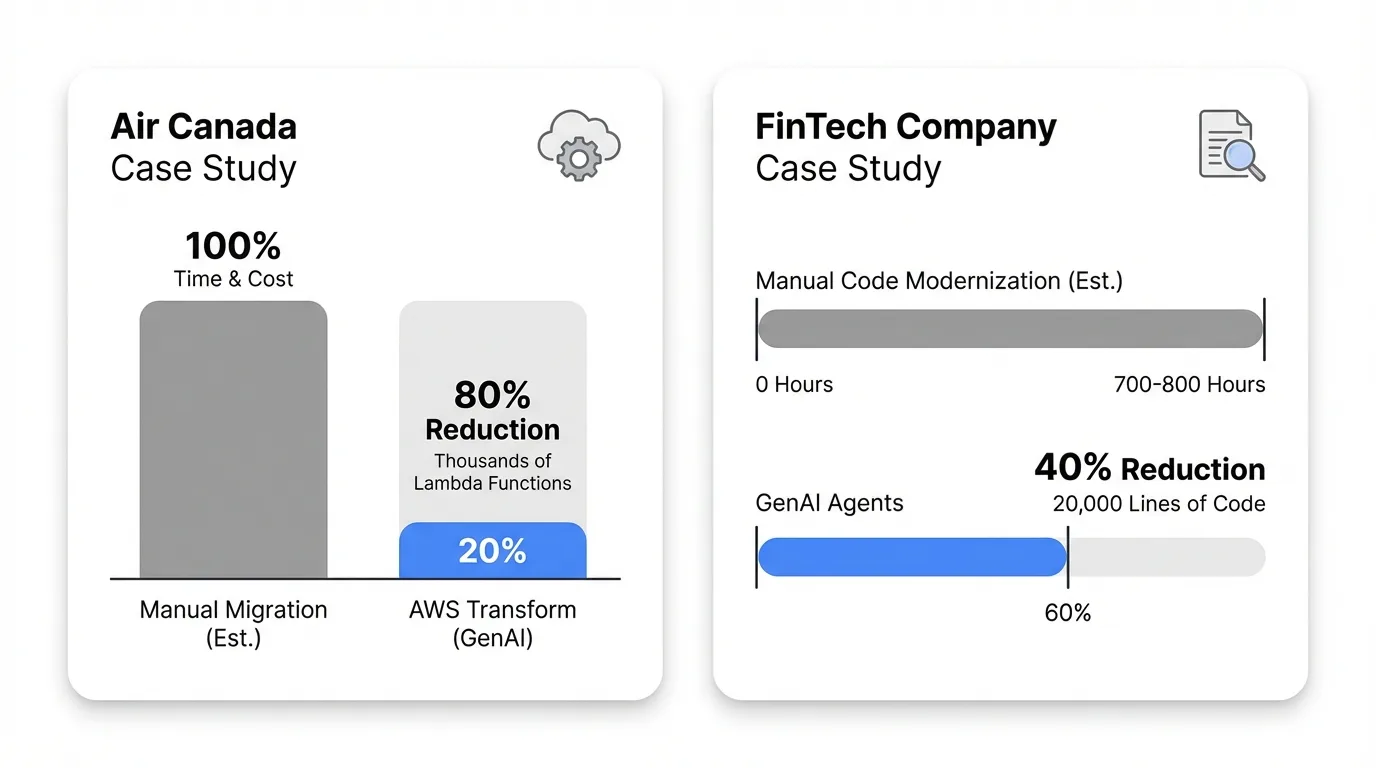
These aren't incremental improvements. They represent fundamental shifts in operational velocity, similar to the transformations we've seen in healthcare organizations automating clinical documentation and financial services firms extracting insights from complex documents.
Transforming deterministic API calls into autonomous agent behavior introduces new risks. In addition to privacy and security being top concerns to enterprise AI strategies, compliance poses additional hurdles in deploying AI agents, especially in data-sensitive industries, where companies might have to navigate data sovereignty laws, data governance rules, and healthcare regulations.
Implement these controls:
Authentication Strategy: Extend existing API authentication to include agent identity. OAuth delegation patterns enable agents to act on behalf of users while maintaining audit trails.
Action Boundaries: Define which operations agents can execute autonomously versus those requiring human approval. GET operations might auto-execute; DELETE requires confirmation.
Audit Trails: Log every agent decision and action. When agents try to access data, companies track the request back to its source (the person who asked the question), authenticating them to ensure they have the right permissions, though legacy systems may struggle with fine-grained access control.
Compliance Frameworks: For regulated industries, implement monitoring that validates agent behavior against policy constraints in real time.
Before transforming your legacy APIs to agents, assess these factors:
API Complexity: Legacy systems built on outdated technologies and platforms cannot easily interface with modern cloud-based systems, creating compatibility issues from differences in data formats, APIs, or communication protocols. Start with simpler endpoints that have clear inputs and outputs.
Data Quality: AI agents require clean, consistent data. 82% of enterprises report data silos disrupt critical business workflows, while 68% of enterprise data remains completely unanalyzed due to integration challenges. Prioritize APIs with well-structured data sources.
Business Value: Focus on high-frequency operations where autonomous execution delivers immediate ROI. Customer service workflows, data retrieval operations, and routine administrative tasks are ideal starting points.
Organizational Readiness: While nearly two-thirds of organizations are experimenting with AI agents, fewer than one in four have successfully scaled them to production, with high-performing organizations three times more likely to scale agents than their peers. Success requires more than technical excellence.
Shakudo accelerates this transformation by providing a data-sovereign infrastructure that integrates modern AI frameworks with existing enterprise systems, all deployed on-premises or in private cloud environments. While 87% cite interoperability as crucial, Shakudo's pre-integrated platform includes the orchestration tools, LLM frameworks, and security controls needed to wrap legacy APIs with intelligent agent layers in days instead of months.
For regulated industries handling sensitive data, Shakudo ensures that the entire API-to-agent transformation happens within the enterprise's security perimeter, maintaining full data sovereignty while enabling the 30-50% process acceleration that agentic AI delivers, without vendor lock-in or exposing proprietary business logic to external systems.
Legacy APIs represent accumulated business intelligence. Rather than replacing them wholesale, transform them incrementally into intelligent agents that preserve their logic while adding autonomous capabilities.
Start small. Identify a single high-value endpoint. Wrap it with an MCP server layer. Add orchestration logic. Deploy alongside the existing API. Measure the results. Then scale.
AI-assisted modernization can reduce technical debt-related costs by 40% and accelerate modernization timelines by 40 to 50%, with some trials showing up to 50% reduction using agentic AI. The transformation from static endpoints to self-optimizing agents isn't just possible. It's already happening at leading enterprises.
Your legacy APIs don't need to be abandoned. They need to be awakened.

Your legacy APIs aren't just technical debt. They're repositories of battle-tested business logic, refined over years of production use. Yet they're trapped in architectures built for a world that no longer exists, a world where systems waited for explicit instructions rather than reasoning about context and making autonomous decisions.
Maintaining legacy systems built on outdated technologies consumes up to 70% of total IT spending, with enterprises losing approximately $370 million per year on average due to outdated technology. But here's the paradox: traditional point-to-point legacy integration methods are ill-equipped for diverse endpoints spanning cloud, mobile, and web, becoming expensive and posing operational risk as a single point of failure, while full modernization exercises entail significant investment of time and costs.
The answer isn't abandoning these APIs. It's transforming them into intelligent agents that can reason, adapt, and execute autonomously.
40% of enterprise applications will be integrated with task-specific AI agents by 2026, up from less than 5% in 2025, with agentic AI projected to drive 30% of enterprise application software revenue by 2035, surpassing $450 billion. This isn't just another technology trend. It represents a fundamental shift in how systems interact.
Traditional APIs are deterministic. They receive structured requests, execute predefined operations, and return predictable responses. AI agents, by contrast, operate in uncertainty. They parse natural language, make contextual decisions, and coordinate multi-step workflows across systems. Legacy infrastructure built decades ago was not designed to support autonomous AI agents, resulting in systems that are brittle, expensive, and slow, requiring AI as smart middleware to translate between modern agent interfaces and legacy systems.
The integration challenge is profound. 87% of IT leaders rate interoperability as very important or crucial to successful agentic AI adoption, as agents must integrate with CRMs, ERPs, ticketing systems, and proprietary databases to access data and trigger workflows that deliver value.
The Strangler Pattern, introduced by Martin Fowler in 2004, offers a proven approach to incremental modernization without the risk of big-bang replacements. Applied to API-to-agent transformation, it enables you to wrap legacy endpoints with intelligent agent layers gradually, preserving business logic while adding autonomous capabilities.

Here's how it works in practice:
Phase 1: Transform - Identify a high-value API endpoint or service module. Create an agent wrapper that sits between callers and the legacy API. MCP, which saw broad adoption throughout 2025, standardizes how agents connect to external tools, databases, and APIs, transforming what was previously custom integration work into plug-and-play connectivity. Your agent wrapper uses Model Context Protocol (MCP) to expose the legacy API as an AI-accessible tool, complete with natural language descriptions and semantic context.

Phase 2: Coexist - Deploy the agent wrapper alongside the existing API. Route specific use cases (particularly those requiring reasoning or context awareness) through the agent layer, while deterministic integrations continue using the legacy API directly. Each extracted microservice can immediately leverage modern architectures, deployment practices, and technology stacks, dramatically reducing risk by limiting the scope of each change and maintaining a functioning system throughout the migration.
Phase 3: Eliminate - As confidence grows, expand the agent wrapper to handle more complex workflows. Eventually, the agent layer becomes the primary interface, and the legacy API becomes an internal implementation detail, potentially refactored or replaced without disrupting the agent interface.
Most legacy APIs have OpenAPI specifications (or can generate them). This becomes your foundation for agent transformation.
As enterprises transition towards being AI-ready, API specifications that were written for human consumption often lack the level of detail that Large Language Models require for reliable operation.
Transform generic OpenAPI descriptions into agent-readable context:
# Before (human-focused)
get:
summary: Get order
parameters:
- name: id
in: path
schema:
type: string
# After (agent-optimized)
get:
summary: Retrieve complete order details including items and status
description: |
Returns full order information for a specific order ID, including:
- Line items with product details and quantities
- Current fulfillment status (pending/shipped/delivered)
- Payment status and method
- Shipping address and tracking information
Use this when you need complete order context. For order lists, use listOrders instead.
parameters:
- name: id
in: path
required: true
schema:
type: string
format: uuid
description: |
The unique order identifier. Must be a valid UUID.
Orders older than 7 years may return 404.
An MCP generator transforms your OpenAPI specification into a functioning MCP server that exposes your API endpoints as tools AI agents can use, with operations documented in OpenAPI format.
Multiple tools support this transformation. FastMCP, openapi-mcp-generator, and managed platforms like Gram automate the conversion. The result is a standardized bridge that AI agents can discover and invoke. As detailed in our comprehensive guide to Model Context Protocol, this approach provides the interoperability layer essential for enterprise AI agent deployments.
The MCP layer provides tool access. True agent behavior requires orchestration:
Frameworks like LangChain, AutoGen, and CrewAI provide the orchestration layer that coordinates multiple agent actions across your wrapped APIs.
The business case for API-to-agent transformation is compelling. Effective AI agents can accelerate business processes by 30% to 50%, while reducing low-value work time by 25% to 40%.
Air Canada deployed AWS Transform to modernize thousands of Lambda functions in just days, achieving an 80% reduction in expected project time and cost compared to manual migration. In financial services, a FinTech company that adopted AI legacy modernization needed to modernize 20,000 lines of code, estimated to take 700 to 800 hours, but after deploying genAI agents, successfully whittled that number by 40%.

These aren't incremental improvements. They represent fundamental shifts in operational velocity, similar to the transformations we've seen in healthcare organizations automating clinical documentation and financial services firms extracting insights from complex documents.
Transforming deterministic API calls into autonomous agent behavior introduces new risks. In addition to privacy and security being top concerns to enterprise AI strategies, compliance poses additional hurdles in deploying AI agents, especially in data-sensitive industries, where companies might have to navigate data sovereignty laws, data governance rules, and healthcare regulations.
Implement these controls:
Authentication Strategy: Extend existing API authentication to include agent identity. OAuth delegation patterns enable agents to act on behalf of users while maintaining audit trails.
Action Boundaries: Define which operations agents can execute autonomously versus those requiring human approval. GET operations might auto-execute; DELETE requires confirmation.
Audit Trails: Log every agent decision and action. When agents try to access data, companies track the request back to its source (the person who asked the question), authenticating them to ensure they have the right permissions, though legacy systems may struggle with fine-grained access control.
Compliance Frameworks: For regulated industries, implement monitoring that validates agent behavior against policy constraints in real time.
Before transforming your legacy APIs to agents, assess these factors:
API Complexity: Legacy systems built on outdated technologies and platforms cannot easily interface with modern cloud-based systems, creating compatibility issues from differences in data formats, APIs, or communication protocols. Start with simpler endpoints that have clear inputs and outputs.
Data Quality: AI agents require clean, consistent data. 82% of enterprises report data silos disrupt critical business workflows, while 68% of enterprise data remains completely unanalyzed due to integration challenges. Prioritize APIs with well-structured data sources.
Business Value: Focus on high-frequency operations where autonomous execution delivers immediate ROI. Customer service workflows, data retrieval operations, and routine administrative tasks are ideal starting points.
Organizational Readiness: While nearly two-thirds of organizations are experimenting with AI agents, fewer than one in four have successfully scaled them to production, with high-performing organizations three times more likely to scale agents than their peers. Success requires more than technical excellence.
Shakudo accelerates this transformation by providing a data-sovereign infrastructure that integrates modern AI frameworks with existing enterprise systems, all deployed on-premises or in private cloud environments. While 87% cite interoperability as crucial, Shakudo's pre-integrated platform includes the orchestration tools, LLM frameworks, and security controls needed to wrap legacy APIs with intelligent agent layers in days instead of months.
For regulated industries handling sensitive data, Shakudo ensures that the entire API-to-agent transformation happens within the enterprise's security perimeter, maintaining full data sovereignty while enabling the 30-50% process acceleration that agentic AI delivers, without vendor lock-in or exposing proprietary business logic to external systems.
Legacy APIs represent accumulated business intelligence. Rather than replacing them wholesale, transform them incrementally into intelligent agents that preserve their logic while adding autonomous capabilities.
Start small. Identify a single high-value endpoint. Wrap it with an MCP server layer. Add orchestration logic. Deploy alongside the existing API. Measure the results. Then scale.
AI-assisted modernization can reduce technical debt-related costs by 40% and accelerate modernization timelines by 40 to 50%, with some trials showing up to 50% reduction using agentic AI. The transformation from static endpoints to self-optimizing agents isn't just possible. It's already happening at leading enterprises.
Your legacy APIs don't need to be abandoned. They need to be awakened.
Your legacy APIs aren't just technical debt. They're repositories of battle-tested business logic, refined over years of production use. Yet they're trapped in architectures built for a world that no longer exists, a world where systems waited for explicit instructions rather than reasoning about context and making autonomous decisions.
Maintaining legacy systems built on outdated technologies consumes up to 70% of total IT spending, with enterprises losing approximately $370 million per year on average due to outdated technology. But here's the paradox: traditional point-to-point legacy integration methods are ill-equipped for diverse endpoints spanning cloud, mobile, and web, becoming expensive and posing operational risk as a single point of failure, while full modernization exercises entail significant investment of time and costs.
The answer isn't abandoning these APIs. It's transforming them into intelligent agents that can reason, adapt, and execute autonomously.
40% of enterprise applications will be integrated with task-specific AI agents by 2026, up from less than 5% in 2025, with agentic AI projected to drive 30% of enterprise application software revenue by 2035, surpassing $450 billion. This isn't just another technology trend. It represents a fundamental shift in how systems interact.
Traditional APIs are deterministic. They receive structured requests, execute predefined operations, and return predictable responses. AI agents, by contrast, operate in uncertainty. They parse natural language, make contextual decisions, and coordinate multi-step workflows across systems. Legacy infrastructure built decades ago was not designed to support autonomous AI agents, resulting in systems that are brittle, expensive, and slow, requiring AI as smart middleware to translate between modern agent interfaces and legacy systems.
The integration challenge is profound. 87% of IT leaders rate interoperability as very important or crucial to successful agentic AI adoption, as agents must integrate with CRMs, ERPs, ticketing systems, and proprietary databases to access data and trigger workflows that deliver value.
The Strangler Pattern, introduced by Martin Fowler in 2004, offers a proven approach to incremental modernization without the risk of big-bang replacements. Applied to API-to-agent transformation, it enables you to wrap legacy endpoints with intelligent agent layers gradually, preserving business logic while adding autonomous capabilities.

Here's how it works in practice:
Phase 1: Transform - Identify a high-value API endpoint or service module. Create an agent wrapper that sits between callers and the legacy API. MCP, which saw broad adoption throughout 2025, standardizes how agents connect to external tools, databases, and APIs, transforming what was previously custom integration work into plug-and-play connectivity. Your agent wrapper uses Model Context Protocol (MCP) to expose the legacy API as an AI-accessible tool, complete with natural language descriptions and semantic context.

Phase 2: Coexist - Deploy the agent wrapper alongside the existing API. Route specific use cases (particularly those requiring reasoning or context awareness) through the agent layer, while deterministic integrations continue using the legacy API directly. Each extracted microservice can immediately leverage modern architectures, deployment practices, and technology stacks, dramatically reducing risk by limiting the scope of each change and maintaining a functioning system throughout the migration.
Phase 3: Eliminate - As confidence grows, expand the agent wrapper to handle more complex workflows. Eventually, the agent layer becomes the primary interface, and the legacy API becomes an internal implementation detail, potentially refactored or replaced without disrupting the agent interface.
Most legacy APIs have OpenAPI specifications (or can generate them). This becomes your foundation for agent transformation.
As enterprises transition towards being AI-ready, API specifications that were written for human consumption often lack the level of detail that Large Language Models require for reliable operation.
Transform generic OpenAPI descriptions into agent-readable context:
# Before (human-focused)
get:
summary: Get order
parameters:
- name: id
in: path
schema:
type: string
# After (agent-optimized)
get:
summary: Retrieve complete order details including items and status
description: |
Returns full order information for a specific order ID, including:
- Line items with product details and quantities
- Current fulfillment status (pending/shipped/delivered)
- Payment status and method
- Shipping address and tracking information
Use this when you need complete order context. For order lists, use listOrders instead.
parameters:
- name: id
in: path
required: true
schema:
type: string
format: uuid
description: |
The unique order identifier. Must be a valid UUID.
Orders older than 7 years may return 404.
An MCP generator transforms your OpenAPI specification into a functioning MCP server that exposes your API endpoints as tools AI agents can use, with operations documented in OpenAPI format.
Multiple tools support this transformation. FastMCP, openapi-mcp-generator, and managed platforms like Gram automate the conversion. The result is a standardized bridge that AI agents can discover and invoke. As detailed in our comprehensive guide to Model Context Protocol, this approach provides the interoperability layer essential for enterprise AI agent deployments.
The MCP layer provides tool access. True agent behavior requires orchestration:
Frameworks like LangChain, AutoGen, and CrewAI provide the orchestration layer that coordinates multiple agent actions across your wrapped APIs.
The business case for API-to-agent transformation is compelling. Effective AI agents can accelerate business processes by 30% to 50%, while reducing low-value work time by 25% to 40%.
Air Canada deployed AWS Transform to modernize thousands of Lambda functions in just days, achieving an 80% reduction in expected project time and cost compared to manual migration. In financial services, a FinTech company that adopted AI legacy modernization needed to modernize 20,000 lines of code, estimated to take 700 to 800 hours, but after deploying genAI agents, successfully whittled that number by 40%.

These aren't incremental improvements. They represent fundamental shifts in operational velocity, similar to the transformations we've seen in healthcare organizations automating clinical documentation and financial services firms extracting insights from complex documents.
Transforming deterministic API calls into autonomous agent behavior introduces new risks. In addition to privacy and security being top concerns to enterprise AI strategies, compliance poses additional hurdles in deploying AI agents, especially in data-sensitive industries, where companies might have to navigate data sovereignty laws, data governance rules, and healthcare regulations.
Implement these controls:
Authentication Strategy: Extend existing API authentication to include agent identity. OAuth delegation patterns enable agents to act on behalf of users while maintaining audit trails.
Action Boundaries: Define which operations agents can execute autonomously versus those requiring human approval. GET operations might auto-execute; DELETE requires confirmation.
Audit Trails: Log every agent decision and action. When agents try to access data, companies track the request back to its source (the person who asked the question), authenticating them to ensure they have the right permissions, though legacy systems may struggle with fine-grained access control.
Compliance Frameworks: For regulated industries, implement monitoring that validates agent behavior against policy constraints in real time.
Before transforming your legacy APIs to agents, assess these factors:
API Complexity: Legacy systems built on outdated technologies and platforms cannot easily interface with modern cloud-based systems, creating compatibility issues from differences in data formats, APIs, or communication protocols. Start with simpler endpoints that have clear inputs and outputs.
Data Quality: AI agents require clean, consistent data. 82% of enterprises report data silos disrupt critical business workflows, while 68% of enterprise data remains completely unanalyzed due to integration challenges. Prioritize APIs with well-structured data sources.
Business Value: Focus on high-frequency operations where autonomous execution delivers immediate ROI. Customer service workflows, data retrieval operations, and routine administrative tasks are ideal starting points.
Organizational Readiness: While nearly two-thirds of organizations are experimenting with AI agents, fewer than one in four have successfully scaled them to production, with high-performing organizations three times more likely to scale agents than their peers. Success requires more than technical excellence.
Shakudo accelerates this transformation by providing a data-sovereign infrastructure that integrates modern AI frameworks with existing enterprise systems, all deployed on-premises or in private cloud environments. While 87% cite interoperability as crucial, Shakudo's pre-integrated platform includes the orchestration tools, LLM frameworks, and security controls needed to wrap legacy APIs with intelligent agent layers in days instead of months.
For regulated industries handling sensitive data, Shakudo ensures that the entire API-to-agent transformation happens within the enterprise's security perimeter, maintaining full data sovereignty while enabling the 30-50% process acceleration that agentic AI delivers, without vendor lock-in or exposing proprietary business logic to external systems.
Legacy APIs represent accumulated business intelligence. Rather than replacing them wholesale, transform them incrementally into intelligent agents that preserve their logic while adding autonomous capabilities.
Start small. Identify a single high-value endpoint. Wrap it with an MCP server layer. Add orchestration logic. Deploy alongside the existing API. Measure the results. Then scale.
AI-assisted modernization can reduce technical debt-related costs by 40% and accelerate modernization timelines by 40 to 50%, with some trials showing up to 50% reduction using agentic AI. The transformation from static endpoints to self-optimizing agents isn't just possible. It's already happening at leading enterprises.
Your legacy APIs don't need to be abandoned. They need to be awakened.