

Commodity price volatility and the complexity of cash rebate programs are two of the largest hidden drags on enterprise margin. Procurement teams in food and beverage, metals, chemicals, energy, and industrial manufacturing track thousands of supplier price points across futures markets, contract clauses, and rebate tiers. Finance teams accrue expected rebate income, then chase invoice-level proof for months. AI agents for commodity pricing and rebate management close that gap by reading contracts, monitoring market signals, and reconciling claims continuously, with auditable actions instead of weekly spreadsheets.
This guide explains how AI agents for commodity pricing and cash rebate workflows are built, where they create measurable lift, and how Shakudo and Kaji deliver an enterprise-ready stack that runs inside your existing infrastructure.
AI agents for commodity pricing and rebate management are software workers that combine large language models, retrieval pipelines, deterministic business logic, and connectors to ERP, contract repositories, market data feeds, and bank statements. They convert pricing memos, supplier contracts, futures curves, and invoice line items into structured signals, then act on them inside enterprise systems with full audit trails.
In a traditional setup, a pricing analyst opens Bloomberg or Refinitiv, exports a curve into Excel, mirrors it against a supplier matrix, and hand-keys an updated price into the ERP. A rebate analyst opens a PDF tier schedule from a supplier, calculates expected cash back on a rolling twelve-month volume, and posts an accrual journal entry. These steps are repetitive, rules-heavy, and slow. They are also where leakage happens. Industry research from firms such as Deloitte and KPMG has flagged that complex B2B rebate programs leak between 4 and 11 percent of expected income through missed claims, mis-tiered accruals, contract drift, and stale price files. Commodity volatility makes the same problem worse on the buy side because every day of stale pricing creates margin risk.
AI agents change the shape of this work. A pricing agent ingests futures and spot data, reads the actual contract clause that governs a supplier price, and proposes the next move with a confidence score. A rebate agent reads the rebate tier schedule from the contract, watches invoice volume in near real time, calculates accruals, files claims with documentation attached, and reconciles cash receipts against the original accrual. Both agents log every decision to an audit table that finance and internal audit can inspect later. The combination matters because pricing and rebates are economically connected. The price you pay drives the volume you book, which drives the rebate tier you hit, which feeds back into landed cost. Treating them as one governed workflow with AI agents for commodity pricing at the center is what unlocks the bigger margin lift.
For enterprise teams evaluating this category, the practical question is no longer whether agents can do the work. It is how to deploy them safely inside production environments with the right data, the right governance, and the right human-in-the-loop checkpoints. That is the work covered in the rest of this guide.
It also helps to put the volatility backdrop in concrete terms. The U.S. Energy Information Administration publishes daily price reference data that procurement teams routinely benchmark against, and its spot price tables for crude oil and refined products show daily swings of several percent during normal weeks and double-digit swings during stress events. Industrial buyers exposed to steel, aluminum, polymers, sugar, cocoa, and ag inputs see comparable behavior on their own indices. When prices move that fast, a weekly pricing committee that meets every Tuesday is a structural source of margin leakage. Agents close that gap by running every day, on every contract, with the same logic the committee would have applied.
An enterprise-grade agent for pricing and rebates is rarely a single model call. It is a small system with five reliable parts, orchestrated by a planning layer and governed by an AI gateway. Understanding each part is what separates a demo from a deployment.
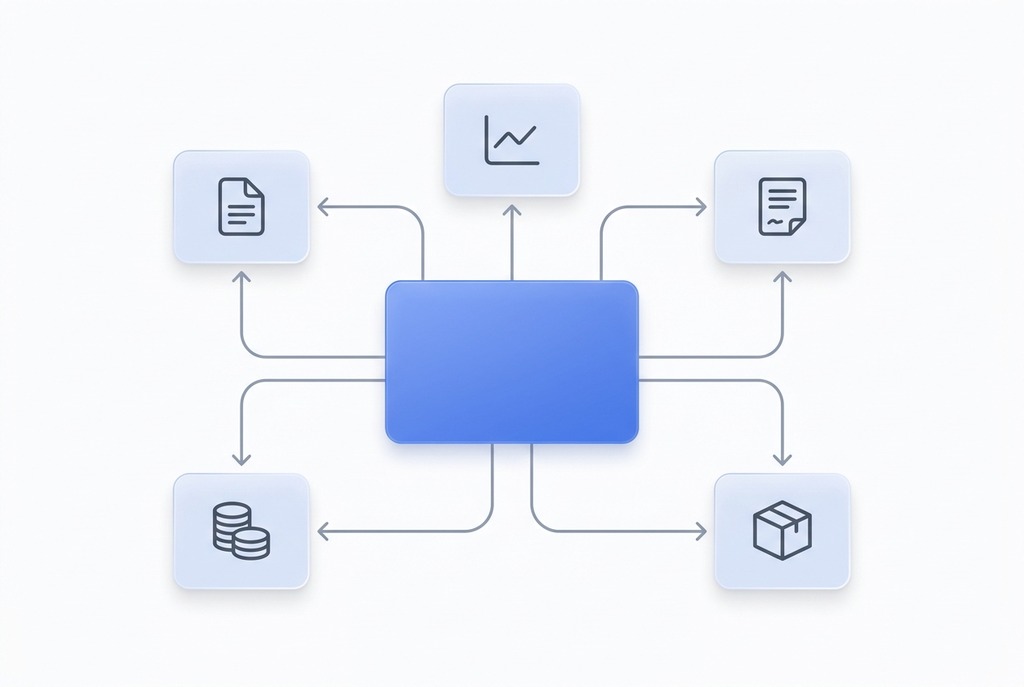
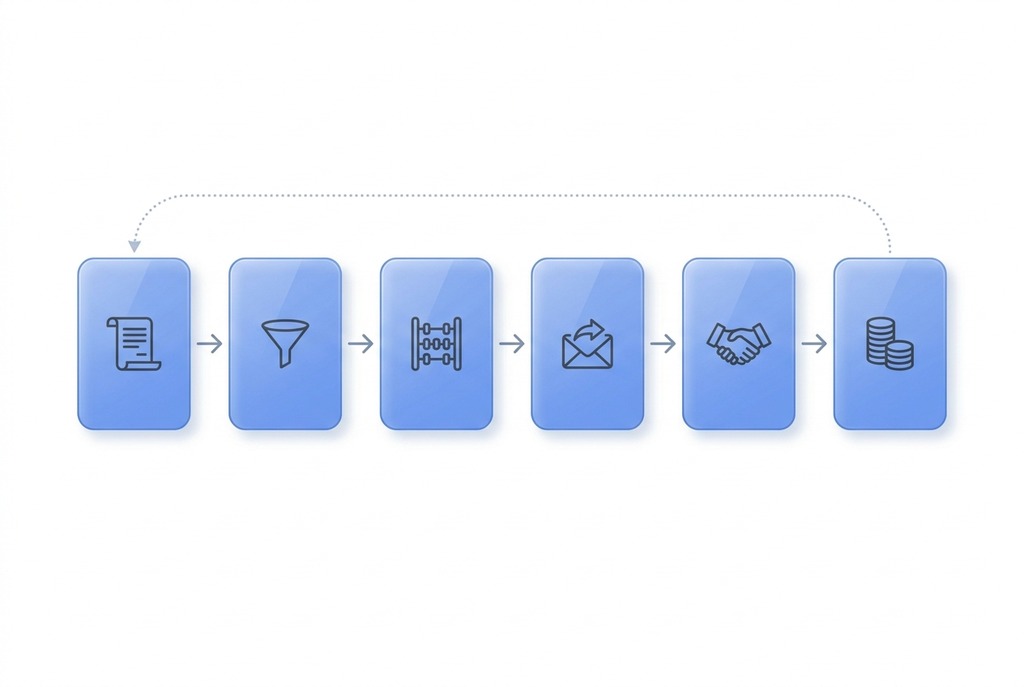
For commodity pricing specifically, a single agent run typically looks like this. The agent identifies that a supplier price file is due for refresh. It pulls the active contract, extracts the index-plus-spread formula, queries the relevant index from a market data provider for the contract's reference window, applies the spread, compares the result with the supplier's last invoice price, and flags any difference greater than the contract tolerance. It drafts an updated price record, attaches the contract clause and the index snapshot as evidence, and routes the draft to the category manager for approval. On approval, it writes the new price to the ERP and creates a one-line entry in the audit log. Reports from analysts such as Gartner and McKinsey have repeatedly noted that this kind of clause-grounded automation is where AI delivers the largest verifiable savings in direct material spend.
For rebate management, the loop is similar but oriented around cash recovery rather than price set. The agent reads the rebate tier schedule from the contract. It pulls actual purchase volume from the ERP. It calculates the accrual for the current period at the projected tier, then again at the most likely realized tier. It generates a claim package with line-item evidence on the cadence the contract specifies, files the claim through the supplier portal or via email, monitors for acknowledgment, and reconciles the eventual cash receipt against the accrual. If a supplier underpays, the agent drafts a dispute with the original line items attached. The same audit log captures every action.
None of this requires a black-box decision. The planner can be configured to defer to a human at any step where impact exceeds a threshold, and the AI gateway can route different model capabilities to different sub-tasks. A small distilled model can classify a document. A larger reasoning model can interpret a complex retroactive growth bonus clause. The gateway, not the agent itself, decides which model handles which step, which is how teams keep both cost and compliance under control. Shakudo's platform is built around exactly this pattern, with model routing, governed tool access, and full audit baked in.
This table compares the most common approaches enterprise teams evaluate when they decide how to modernize commodity pricing and rebate workflows. It assumes an enterprise context with thousands of supplier line items and complex multi-tier rebate programs.
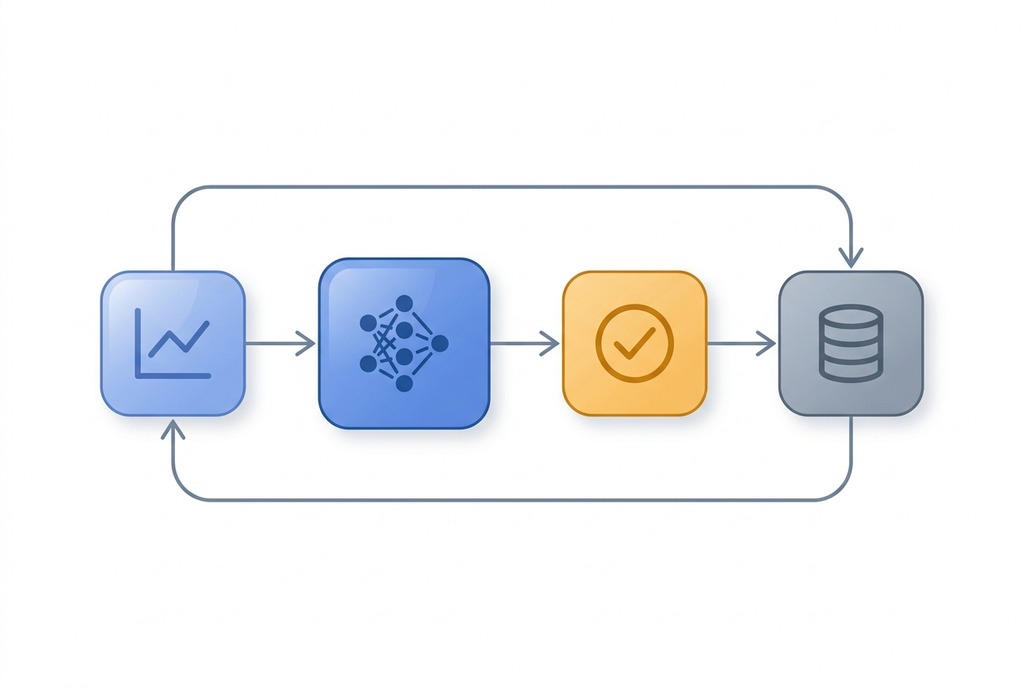
Shakudo runs governed enterprise AI agents inside your existing infrastructure. The Shakudo platform deploys to your VPC or on-prem environment, hosts the AI gateway, manages connectors to ERP and document systems, and provides the orchestration layer that turns model calls into governed workflows. Kaji is the autonomous agent that drives commodity pricing and rebate management work day to day, with planning, tool use, audit logging, and approval policy built in.
For commodity pricing, Kaji reads supplier contracts directly, ingests market data, and proposes contract-grounded price updates with clause-level citations. For rebate management, Kaji extracts tier schedules from contracts, watches ERP volume, calculates accruals, files claims with evidence packs, and reconciles cash receipts. Every action is logged in a structured audit table that finance and internal audit teams can query. Approvals are routed to the right humans on the right cadence.
Because the Shakudo platform sits between agents and frontier models, model routing, cost tracking, and compliance controls are centralized. A small distilled model can classify routine documents at low cost. A larger reasoning model can interpret an unusual retroactive growth clause when accuracy matters more than latency. The same gateway also enforces data residency and access policies, so the agent never reaches outside the perimeter the security team approved.
Enterprise pricing and rebate workflows are not a science project. They are core finance and procurement processes that demand reliability, evidence, and control. Shakudo and Kaji deliver AI agents for commodity pricing and rebate management as a production capability, not a prototype. Teams that adopt this stack typically see measurable cycle time reduction in their first quarter and material rebate recovery in the first year.
Get a Demo of Shakudo and Kaji Today.
Commodity pricing and rebate management used to be where margin quietly leaked out of the enterprise. AI agents change that math by reading contracts directly, watching markets continuously, and acting inside ERP and supplier portals with full audit. The teams that move first will lock in cycle time reduction, recovered rebate income, and tighter margin discipline. The technology is ready. The remaining question is which enterprise platform you trust to run it in production.
Retroactive rebate recovery is usually the fastest payback. Most enterprises have rebate contracts with volume, growth, and mix tiers that were never fully claimed in prior periods because the data work was too tedious for analysts to chase. A rebate agent can read the contracts, pull historical purchase volume from the ERP, identify missed thresholds, and assemble claim packages with line-item evidence. Recovered cash typically lands within one to two quarters and funds the broader rollout to pricing and active rebate management.
The agent uses a retrieval and parsing layer to extract the clause as structured rules, with a citation back to the source paragraph. For unusual clauses, the planner routes the interpretation step to a larger reasoning model and surfaces the structured output for a human reviewer to confirm before any downstream action. Once confirmed, the rule becomes part of the agent's policy for that contract until the contract is amended. This balance of model interpretation and human confirmation is what makes the system safe to deploy on complex rebate programs.
No. The agent connects to your existing systems through an AI gateway and treats them as governed tools. SAP, Oracle, NetSuite, Coupa, Ariba, and most major rebate management systems already expose the APIs or document stores the agent needs. The gateway turns those endpoints into agent-readable tools with field-level permissions. Replacement of underlying systems is sometimes useful later, but it is not a prerequisite. The fastest path is to keep your systems of record and add governed agents on top.
The gateway sits between the agent and the underlying models. It enforces who is allowed to call which model, with what data, for what purpose. It logs every call in a structured record. It routes cheap distilled models to routine classification and larger reasoning models to high-stakes interpretation, which keeps total spend predictable. It also enforces data residency and output filtering. Without a gateway, an agent that talks to frontier models directly is hard to defend during an audit and easy to misconfigure into runaway cost.
Every agent action becomes a structured record with timestamps, the agent identity, the model used, the tool called, the inputs, the outputs, the policy applied, the human approver if any, and links to the evidence pack. Finance can query these records like any other table. Internal audit can sample them. External auditors can be granted a read-only view. This is materially stronger than the email and spreadsheet trail that most commodity pricing and rebate workflows rely on today.
A bounded first workflow typically goes from kickoff to a live pilot within six to ten weeks, depending on connector readiness and policy review cadence. The first two weeks cover scope, data inventory, and policy. Weeks three through six cover gateway setup, connector wiring, and planner configuration. The remaining weeks cover parallel pilot runs against historical periods and the first live cycle. Broader rollout to additional supplier segments and adjacent workflows follows the same pattern with shorter setup time as the connector library and policy framework grow.
Many supplier portals still require manual upload of claim packages or web form submission. Agents can drive these portals through governed browser automation with the same audit and approval policy as any other tool. The agent assembles the claim package, fills the portal form, attaches the evidence pack, and records the confirmation number. If a portal changes its layout, the connector is updated centrally without disrupting the rest of the workflow.
A generic copilot answers analyst questions and drafts text. It does not have governed write access to your ERP, it does not enforce policy, and it does not produce a structured audit trail. An enterprise AI agent for commodity pricing is a system, not a chat window. It plans, calls tools through a gateway, writes back to systems of record on approval, and logs every step. The two can coexist, but they are not interchangeable. The copilot helps analysts. The agent operates the workflow.
Policy defines an impact threshold. Below the threshold, the agent acts and logs. Above the threshold, the agent drafts the action and routes it for human approval through whatever workflow tool the team already uses, often email, Slack, or a procurement system queue. The reviewer sees the proposed action, the evidence, and the citation. Approval triggers the write-back. Rejection logs the reason and feeds back into the planner. Thresholds usually tighten as confidence in the agent grows and as analysts see how often the agent matches their own judgment.
Shakudo provides the platform layer that makes enterprise AI agents production-ready. The Shakudo platform deploys inside your VPC or on-prem environment, hosts a governed AI gateway, manages a library of enterprise connectors, and runs the orchestration layer for agents. Kaji is the autonomous agent that drives pricing and rebate workflows on top of the platform, with audit, approvals, and model routing built in. The combination gives finance and procurement leaders a single trusted stack for both AI agents for commodity pricing and cash rebate management, with measurable cycle time and margin outcomes. Get a Demo of Shakudo and Kaji Today.


%201.svg)










.png)


