← Back to Blog

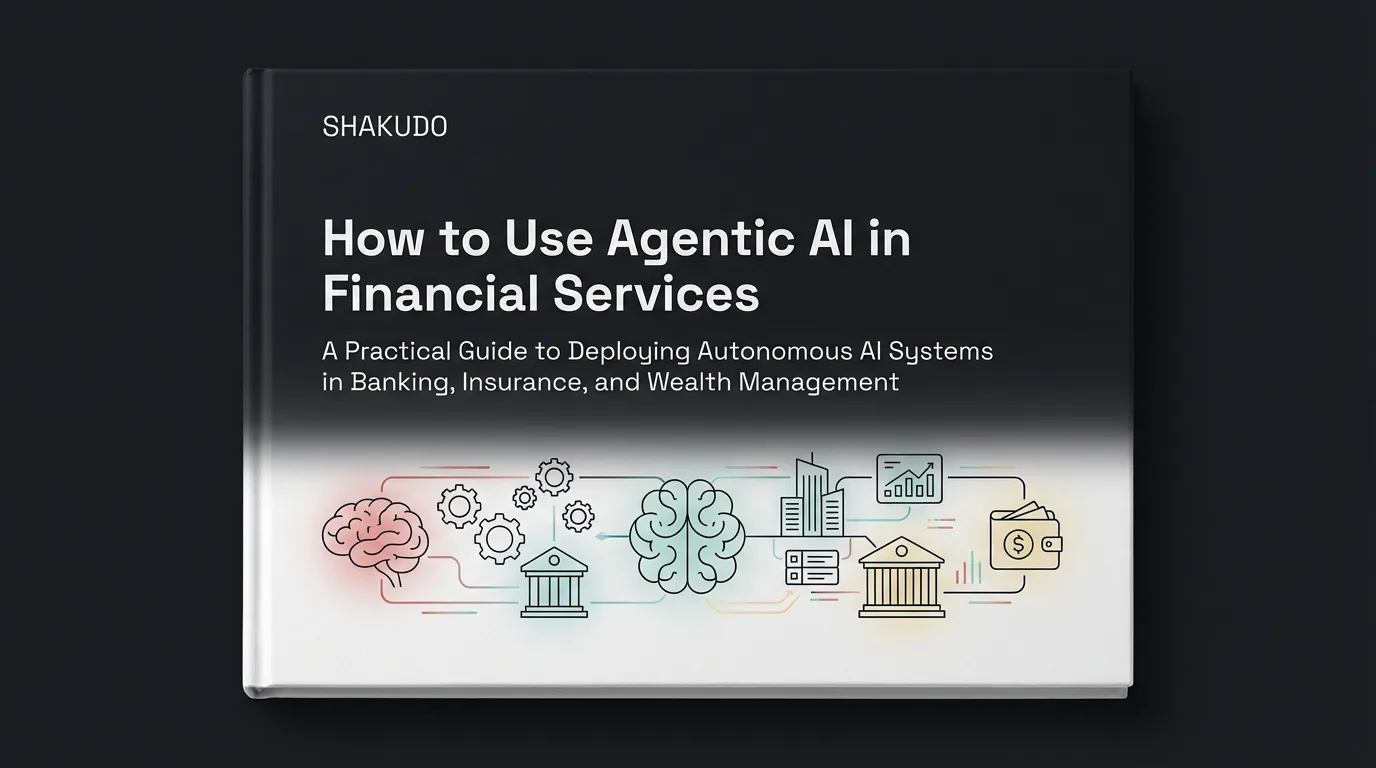
How to Use Agentic AI in Financial Services

By:
No items found.
Updated on:
January 29, 2026

Mentioned Shakudo Ecosystem Components

No items found.

Financial services leaders face a critical question: How do you scale operations, reduce costs, and improve customer experience without compromising compliance or control? Traditional automation has reached its limits, requiring constant human intervention for complex decisions. Meanwhile, agentic AI—systems that can perceive, decide, and act autonomously—is reshaping what's possible, with early adopters like Robinhood achieving 80% cost reductions while processing 10x transaction volumes.

Yet most institutions struggle with the implementation gap: Which use cases deliver immediate value? How do you deploy AI agents without sacrificing data sovereignty? What governance frameworks prevent autonomous systems from creating regulatory risk?

In this white paper, you'll discover:

  • How to identify high-ROI use cases for agentic AI in fraud detection, claims processing, and compliance workflows—with real-world benchmarks from leading institutions
  • Why the SaaS vs. sovereign deployment decision determines whether you can operate in regulated environments, and how to architect for both control and speed
  • The governance framework that lets agents operate autonomously while maintaining regulatory compliance and human oversight
  • A practical roadmap for organizational change as your workforce shifts from task execution to agent supervision and strategic decision-making

Download the whitepaper now to learn how forward-thinking financial institutions are turning agentic AI from competitive advantage into operational necessity—and how to avoid the costly missteps that delay ROI.

See 175+ of the Best Data & AI Tools in One Place.

Get Started
trusted by leaders
Whitepaper

Financial services leaders face a critical question: How do you scale operations, reduce costs, and improve customer experience without compromising compliance or control? Traditional automation has reached its limits, requiring constant human intervention for complex decisions. Meanwhile, agentic AI—systems that can perceive, decide, and act autonomously—is reshaping what's possible, with early adopters like Robinhood achieving 80% cost reductions while processing 10x transaction volumes.

Yet most institutions struggle with the implementation gap: Which use cases deliver immediate value? How do you deploy AI agents without sacrificing data sovereignty? What governance frameworks prevent autonomous systems from creating regulatory risk?

In this white paper, you'll discover:

  • How to identify high-ROI use cases for agentic AI in fraud detection, claims processing, and compliance workflows—with real-world benchmarks from leading institutions
  • Why the SaaS vs. sovereign deployment decision determines whether you can operate in regulated environments, and how to architect for both control and speed
  • The governance framework that lets agents operate autonomously while maintaining regulatory compliance and human oversight
  • A practical roadmap for organizational change as your workforce shifts from task execution to agent supervision and strategic decision-making

Download the whitepaper now to learn how forward-thinking financial institutions are turning agentic AI from competitive advantage into operational necessity—and how to avoid the costly missteps that delay ROI.

How to Use Agentic AI in Financial Services

Learn how financial institutions deploy agentic AI for fraud detection, claims processing, and customer service—from strategy to implementation.
| Case Study
How to Use Agentic AI in Financial Services

Key results

About

industry

Tech Stack

No items found.

Financial services leaders face a critical question: How do you scale operations, reduce costs, and improve customer experience without compromising compliance or control? Traditional automation has reached its limits, requiring constant human intervention for complex decisions. Meanwhile, agentic AI—systems that can perceive, decide, and act autonomously—is reshaping what's possible, with early adopters like Robinhood achieving 80% cost reductions while processing 10x transaction volumes.

Yet most institutions struggle with the implementation gap: Which use cases deliver immediate value? How do you deploy AI agents without sacrificing data sovereignty? What governance frameworks prevent autonomous systems from creating regulatory risk?

In this white paper, you'll discover:

  • How to identify high-ROI use cases for agentic AI in fraud detection, claims processing, and compliance workflows—with real-world benchmarks from leading institutions
  • Why the SaaS vs. sovereign deployment decision determines whether you can operate in regulated environments, and how to architect for both control and speed
  • The governance framework that lets agents operate autonomously while maintaining regulatory compliance and human oversight
  • A practical roadmap for organizational change as your workforce shifts from task execution to agent supervision and strategic decision-making

Download the whitepaper now to learn how forward-thinking financial institutions are turning agentic AI from competitive advantage into operational necessity—and how to avoid the costly missteps that delay ROI.

Ready for Enterprise AI?

Neal Gilmore
Request a Demo