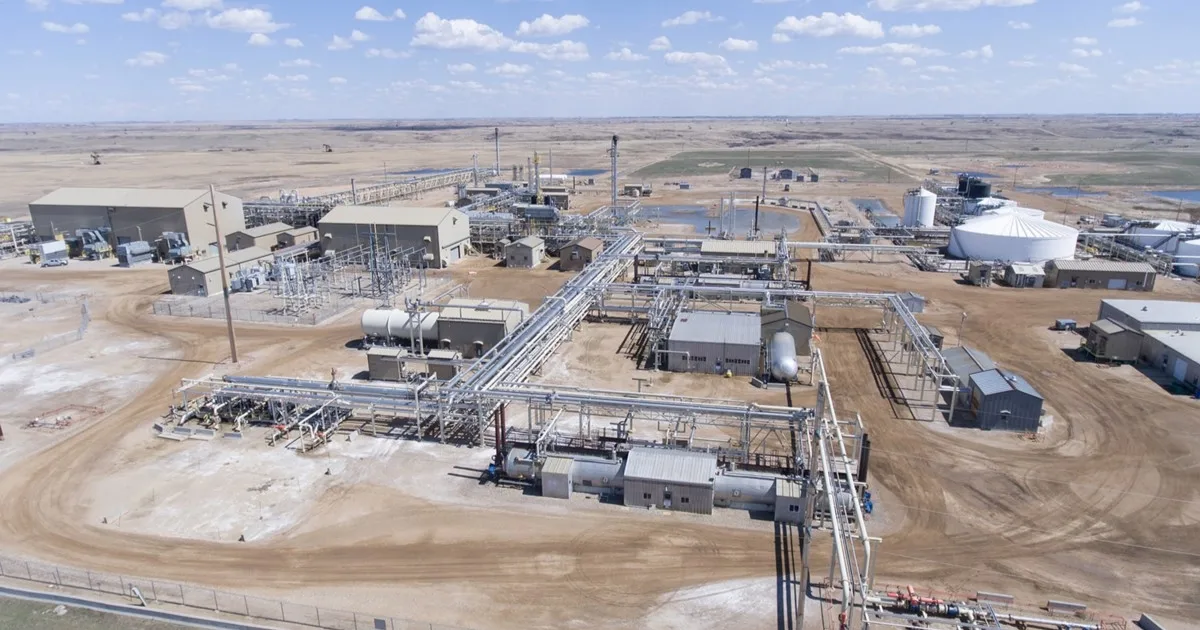







Unplanned downtime at an oil and gas facility costs roughly $500,000 per hour, a figure that has more than doubled in two years. The data that could prevent it is already being generated, but it sits trapped in disconnected systems.
A typical operator's asset hierarchy is fragmented across 14 systems, and reconciling it burns about $150,000 in engineering time before any new platform goes live. Agentic RPA closes that gap by moving, reconciling, and reporting the data automatically.
Every system in an operator's stack has its own idea of what a well is. SCADA calls it a tag such as WELL-007-PRESS. ERP calls it a cost center such as WELL-7-A. The CMMS calls it an asset with a third identifier, and GIS tracks it as a feature with coordinates and a fourth. Before any automation can rank a day's work, those systems have to agree on what is being ranked.
This fragmentation is why engineers spend hours reformatting CSV files, fixing broken scripts and rerunning reservoir models because one input was off. Compliance teams copy production figures from one database into regulatory templates by hand. Finance never sees SCADA data until someone moves it manually. The result is decision latency: by the time data reaches the people who act on it, the window to prevent a costly outage has often closed.
Shakudo deploys an agentic RPA platform on the operator's own infrastructure, on-prem or in the customer's cloud. An AI agent reads the source system, understands the data structure, and writes it into the target system in the correct format. When a regulatory template changes, the agent adapts without a developer rewriting the integration, so the platform keeps working as templates and schemas evolve.
Operators that deploy agentic automation report 20% less unplanned downtime and 25% lower maintenance costs, and one major operator projects over $1 billion in savings by applying AI and automation across its business. The gains come from closing the gap between data generation and action. When an agent detects declining production or abnormal pump vibration in SCADA telemetry, it routes a work order and surfaces the relevant context immediately instead of waiting for a weekly manual review.
The agent orchestrates workflows across SCADA, ERP, historians, and regulatory reporting tools. It pulls pressure and flow readings from SCADA, reconciles them against ERP cost centers, and generates compliance reports in the required format. A portal with role-based access control ensures field operators, engineers, and compliance staff each see and act on only the data their role permits.
Every data movement carries an audit trail. Each automated run records what was read, what was written, and who authorized it, which matters during regulatory inspections. When an agent encounters a field it cannot map confidently, it flags the exception for a human reviewer instead of writing bad data, so automation speeds up the routine work while people handle the edge cases that require judgment.
OpenAI models power the natural language understanding that lets the agent interpret unstructured fields and adapt to schema changes without custom code for every variation. FastAPI exposes the workflow APIs so source systems and the portal can call each pipeline, and Streamlit gives teams a lightweight interface to trigger, monitor, and audit each automated run.
The platform fits oil and gas operators running disconnected SCADA, ERP, and regulatory reporting stacks: upstream production teams reconciling well-level telemetry against cost centers, midstream and downstream operations moving volumes and financials between systems, and compliance staff filing production and emissions reports on a fixed calendar.
It also fits engineering teams that spend hours reformatting CSV files and fixing broken scripts, and finance teams that need SCADA data in the general ledger without a manual movement. The role-based portal keeps each function inside the data its role permits.
Agentic RPA uses AI agents to automate data entry, report generation, and workflow orchestration across oil and gas systems. Unlike fixed scripts, the agents adapt when field names or report templates change, so integrations keep working without developer intervention.
The agent reads operational data from SCADA and reconciles it against ERP records. It maps tags to cost centers, matches asset identifiers, and writes data in the format each system expects. n8n coordinates the handoffs while the agent handles the matching logic.
Yes. The agent pulls production and emissions data from source systems, formats it to match regulatory templates, and generates the required reports. When a template changes, the agent adapts without a manual rewrite, reducing errors and the time compliance teams spend on data entry.
The portal restricts what each user can see and do based on their role. Field operators, engineers, and compliance staff interact only with the data and actions their role permits, which keeps sensitive operational and financial data protected while each team works efficiently.
When the goal is moving SCADA, ERP, and regulatory data without manual handoffs, a conversation with Shakudo is the fastest way to see it on your own systems. The platform deploys on your own infrastructure, on-prem or in your cloud, and a first working pipeline is in place within days. Book a demo to review the numbers with your team.
Oil and gas operators lose hours to manual data movement across SCADA, ERP, and regulatory reporting systems. Agentic RPA portals with role-based access control automate data entry, report generation, and workflow orchestration across these disconnected systems, cutting costs and reducing errors.










"What drew me in is simple. When developers ship production-ready code this quickly, how can I have environments spun up fast enough? Shakudo is how we close that gap."


"Shakudo does not just provide the platform. It is a real partnership. They are always there to help and execute our vision faster and the right way. It is like a co-team working together to achieve our goals."