← Back to Blog

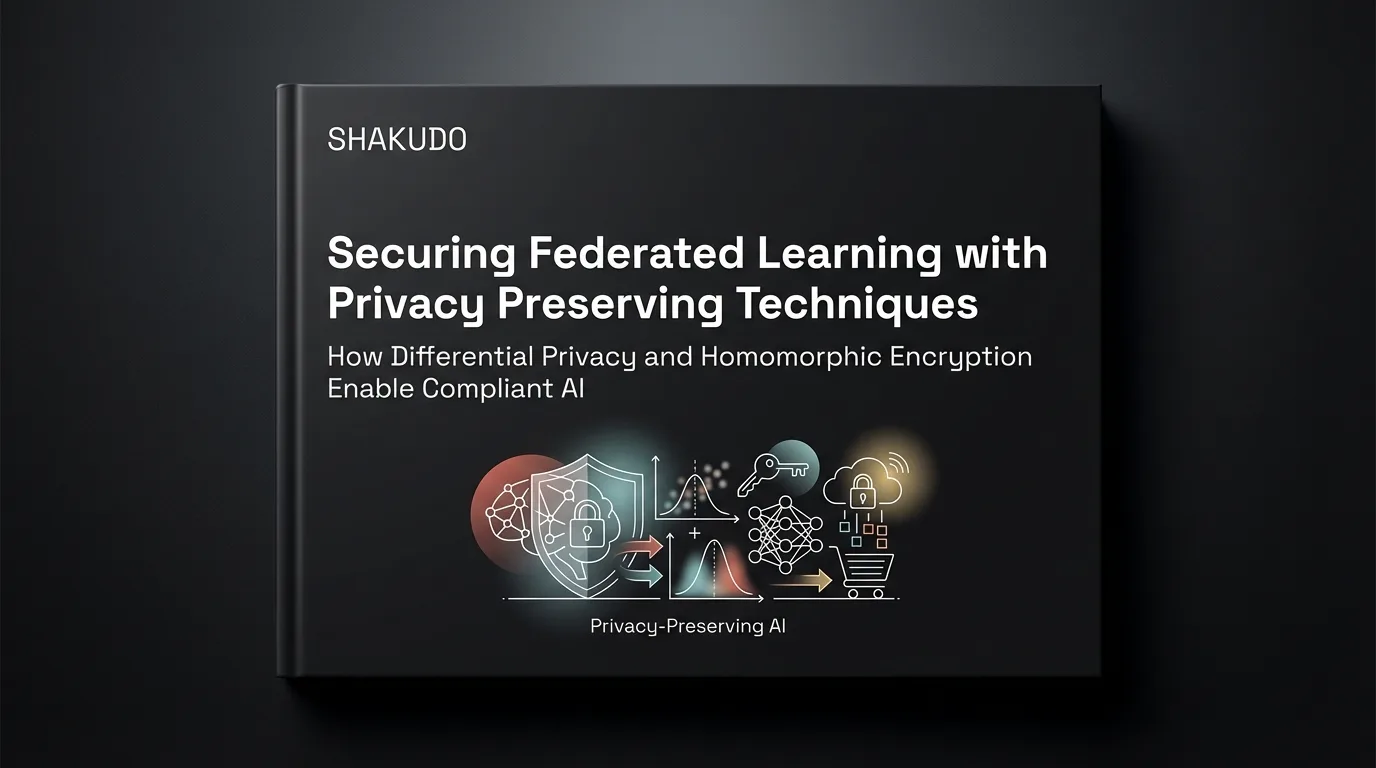
Securing Federated Learning with Privacy Preserving Techniques

By:
No items found.
Updated on:
January 7, 2026

Mentioned Shakudo Ecosystem Components

No items found.

Your organization sits on valuable data that could revolutionize AI models—but regulatory constraints, privacy concerns, and competitive risks keep it locked away. How can you harness distributed data sources for machine learning without exposing sensitive information? While Federated Learning promises decentralized AI training, recent vulnerabilities reveal it's not secure by default, leaving enterprises caught between innovation and compliance.

In this white paper, you'll discover:

  • How Differential Privacy and Homomorphic Encryption address critical FL vulnerabilities—gradient leakage, membership inference, and model poisoning attacks—with proven mathematical guarantees
  • Implementation frameworks for deploying privacy-preserving AI in regulated industries (healthcare, finance, government) that satisfy GDPR, HIPAA, and data sovereignty requirements
  • Real-world ROI calculations showing how secure federated learning unlocks cross-subsidiary, partner, and jurisdictional AI collaborations previously blocked by legal constraints
  • Technical comparison matrix of privacy techniques with guidance on when to apply differential privacy, homomorphic encryption, or hybrid approaches based on your security posture and performance requirements

Download this whitepaper to transform your AI strategy from siloed experimentation to secure, collaborative intelligence that maintains competitive advantage while meeting the strictest privacy standards.

See 175+ of the Best Data & AI Tools in One Place.

Get Started
trusted by leaders
Whitepaper

Your organization sits on valuable data that could revolutionize AI models—but regulatory constraints, privacy concerns, and competitive risks keep it locked away. How can you harness distributed data sources for machine learning without exposing sensitive information? While Federated Learning promises decentralized AI training, recent vulnerabilities reveal it's not secure by default, leaving enterprises caught between innovation and compliance.

In this white paper, you'll discover:

  • How Differential Privacy and Homomorphic Encryption address critical FL vulnerabilities—gradient leakage, membership inference, and model poisoning attacks—with proven mathematical guarantees
  • Implementation frameworks for deploying privacy-preserving AI in regulated industries (healthcare, finance, government) that satisfy GDPR, HIPAA, and data sovereignty requirements
  • Real-world ROI calculations showing how secure federated learning unlocks cross-subsidiary, partner, and jurisdictional AI collaborations previously blocked by legal constraints
  • Technical comparison matrix of privacy techniques with guidance on when to apply differential privacy, homomorphic encryption, or hybrid approaches based on your security posture and performance requirements

Download this whitepaper to transform your AI strategy from siloed experimentation to secure, collaborative intelligence that maintains competitive advantage while meeting the strictest privacy standards.

Securing Federated Learning with Privacy Preserving Techniques

Federated Learning enables decentralized AI training, but vulnerabilities expose it to attacks. Learn how Differential Privacy and Homomorphic Encryption secure FL deployments while maintaining compliance.
| Case Study
Securing Federated Learning with Privacy Preserving Techniques

Key results

About

industry

Tech Stack

No items found.

Your organization sits on valuable data that could revolutionize AI models—but regulatory constraints, privacy concerns, and competitive risks keep it locked away. How can you harness distributed data sources for machine learning without exposing sensitive information? While Federated Learning promises decentralized AI training, recent vulnerabilities reveal it's not secure by default, leaving enterprises caught between innovation and compliance.

In this white paper, you'll discover:

  • How Differential Privacy and Homomorphic Encryption address critical FL vulnerabilities—gradient leakage, membership inference, and model poisoning attacks—with proven mathematical guarantees
  • Implementation frameworks for deploying privacy-preserving AI in regulated industries (healthcare, finance, government) that satisfy GDPR, HIPAA, and data sovereignty requirements
  • Real-world ROI calculations showing how secure federated learning unlocks cross-subsidiary, partner, and jurisdictional AI collaborations previously blocked by legal constraints
  • Technical comparison matrix of privacy techniques with guidance on when to apply differential privacy, homomorphic encryption, or hybrid approaches based on your security posture and performance requirements

Download this whitepaper to transform your AI strategy from siloed experimentation to secure, collaborative intelligence that maintains competitive advantage while meeting the strictest privacy standards.

Ready for Enterprise AI?

Neal Gilmore
Get a Demo