
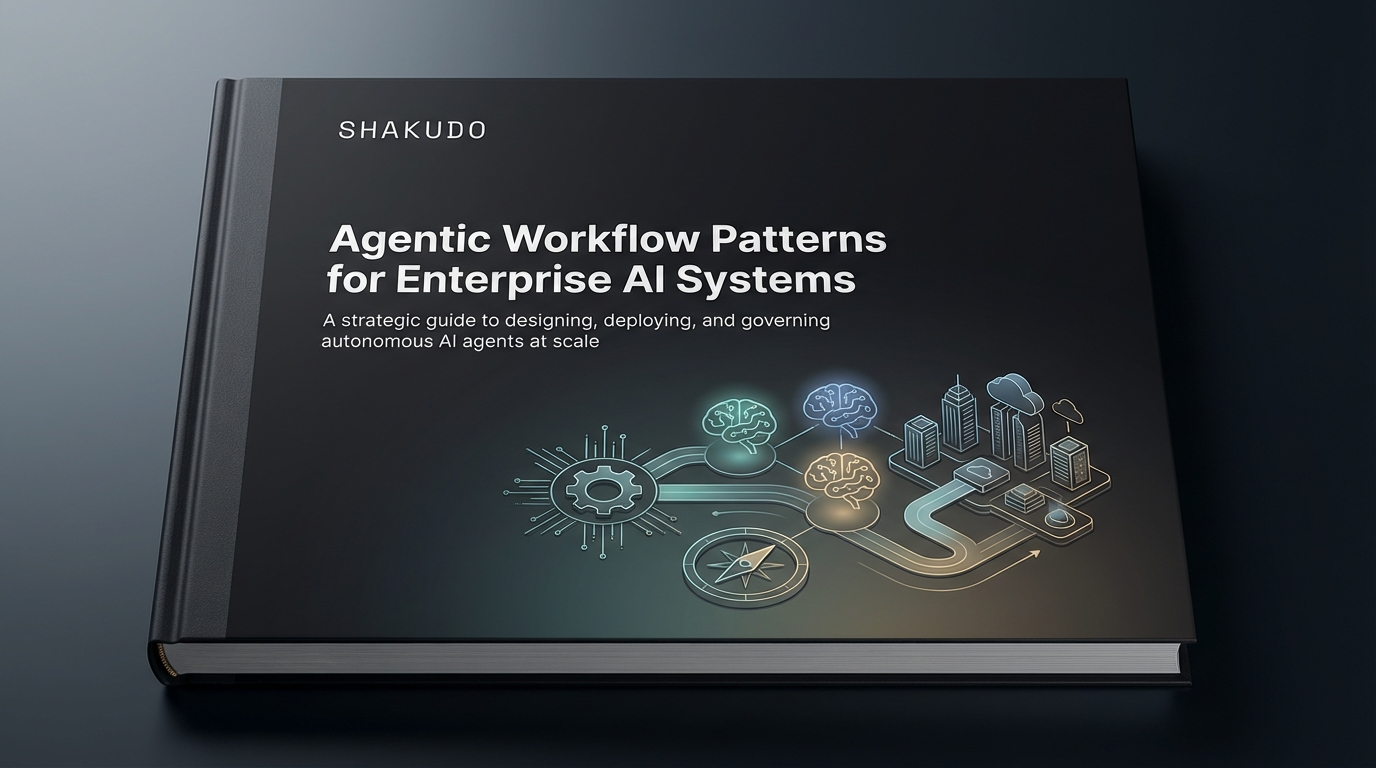
AI that acts autonomously sounds transformative—until you realize most enterprise implementations still require constant human oversight, manual error correction, and workflow redesign. While 85% of organizations experiment with AI, fewer than 20% successfully deploy systems that independently complete complex, multi-step business processes. The gap isn't technology—it's architecture.
The difference between an AI assistant and an autonomous agent lies in proven workflow patterns. Leading enterprises are already using these frameworks to automate processes that traditionally demanded extensive coordination across teams, reducing operational costs by 40% while accelerating execution speed.
In this white paper, you'll discover:
Download the full whitepaper now to build agentic AI systems that move beyond proof-of-concept to deliver measurable enterprise value.
AI that acts autonomously sounds transformative—until you realize most enterprise implementations still require constant human oversight, manual error correction, and workflow redesign. While 85% of organizations experiment with AI, fewer than 20% successfully deploy systems that independently complete complex, multi-step business processes. The gap isn't technology—it's architecture.
The difference between an AI assistant and an autonomous agent lies in proven workflow patterns. Leading enterprises are already using these frameworks to automate processes that traditionally demanded extensive coordination across teams, reducing operational costs by 40% while accelerating execution speed.
In this white paper, you'll discover:
Download the full whitepaper now to build agentic AI systems that move beyond proof-of-concept to deliver measurable enterprise value.
AI that acts autonomously sounds transformative—until you realize most enterprise implementations still require constant human oversight, manual error correction, and workflow redesign. While 85% of organizations experiment with AI, fewer than 20% successfully deploy systems that independently complete complex, multi-step business processes. The gap isn't technology—it's architecture.
The difference between an AI assistant and an autonomous agent lies in proven workflow patterns. Leading enterprises are already using these frameworks to automate processes that traditionally demanded extensive coordination across teams, reducing operational costs by 40% while accelerating execution speed.
In this white paper, you'll discover:
Download the full whitepaper now to build agentic AI systems that move beyond proof-of-concept to deliver measurable enterprise value.


%201.svg)





.png)


