

REQUEST PRICING
VERTEX AI · GOOGLE VERTEX AI ALTERNATIVE

The Vertex AI Alternative That Runs in Your Own Infrastructure

Shakudo runs the AI platform inside your own infrastructure, with a swappable model catalog and portability across Google Cloud, AWS, Azure, and on-premises. Calls to a hosted model still go to that provider, under your own contract, with zero retention and no training on your data.

300+
Pre-Built Components
2-4
Weeks to Deploy
5,000+
Connectors

See How It Works

Quick overview of pricing, features, and deployment options.

Step 1 Step 2 Step 3
For information about how Shakudo handles your personal data, please see our Privacy Policy.
Trusted by the best
QuadReal
Loblaw Digital
CentralReach
Huntington Bank
BWX Technologies
Gallo
Quantum Metric
CloudHQ
Flexivan
Whitecap Resources
THE CHALLENGE

Vertex AI Is a Strong Managed ML Platform. It Is Also One Layer.

Google Vertex AI covers training and serving well. What it does not decide is where your platform runs, which models your teams may reach, how that spend is structured, or whether any of it moves if the underlying cloud changes. Those stay separate decisions, and they bind harder with every application built on top.

A Model Catalog You Control

Shakudo integrates 300+ components and treats the model catalog as a swappable layer. Route a request to a Vertex AI model, a model on another cloud, or an open-weight model you host yourself, without rewriting the applications around it.

The Platform Runs in Your Environment

Deploy on Kubernetes you already run: your Google Cloud project, another cloud, your data center, or an air-gapped network. Data the platform stores stays in your environment. A call to a hosted model goes to that provider under your own contract, with zero retention and no training on your inputs.

A Cost Structure You Can Read

No per-seat platform licensing and no compute markup layered on top of provider spend. Run on your own cloud rates, keep your existing model agreements, and see per-token provider costs against the contract you already negotiated.

CAPABILITIES

The Platform Around the Model Catalog

Integration, deployment, and isolation are platform defaults, so the managed ML service becomes one component instead of the foundation.

ONE UNIFIED ECOSYSTEM

One Ecosystem for the Entire Data Stack

Ingestion, transformation, orchestration, ML training, model serving, and BI managed through a single platform. The pipeline that feeds your models lives next to the models, rather than in services your data team has to reach across vendors to assemble.

See details →
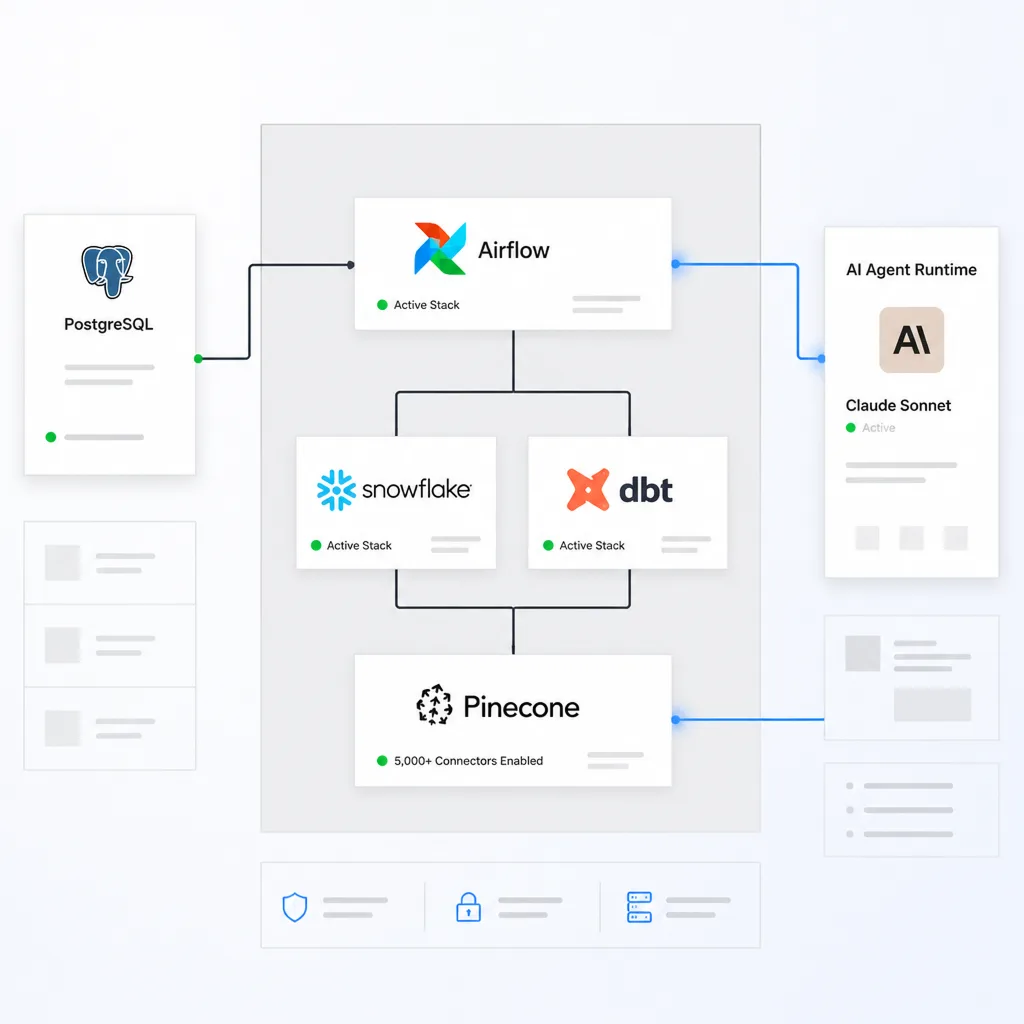
One Ecosystem for the Entire Data Stack
ANY CLOUD OR ON-PREM

Deploy Wherever Kubernetes Exists

Google Cloud, AWS, Azure, or your own data center. Models reached through Vertex AI sit side by side with models from other providers and open-weight models you host, under one consistent identity, policy, and audit layer. Moving clouds is a deployment change, not a rebuild.

See details →
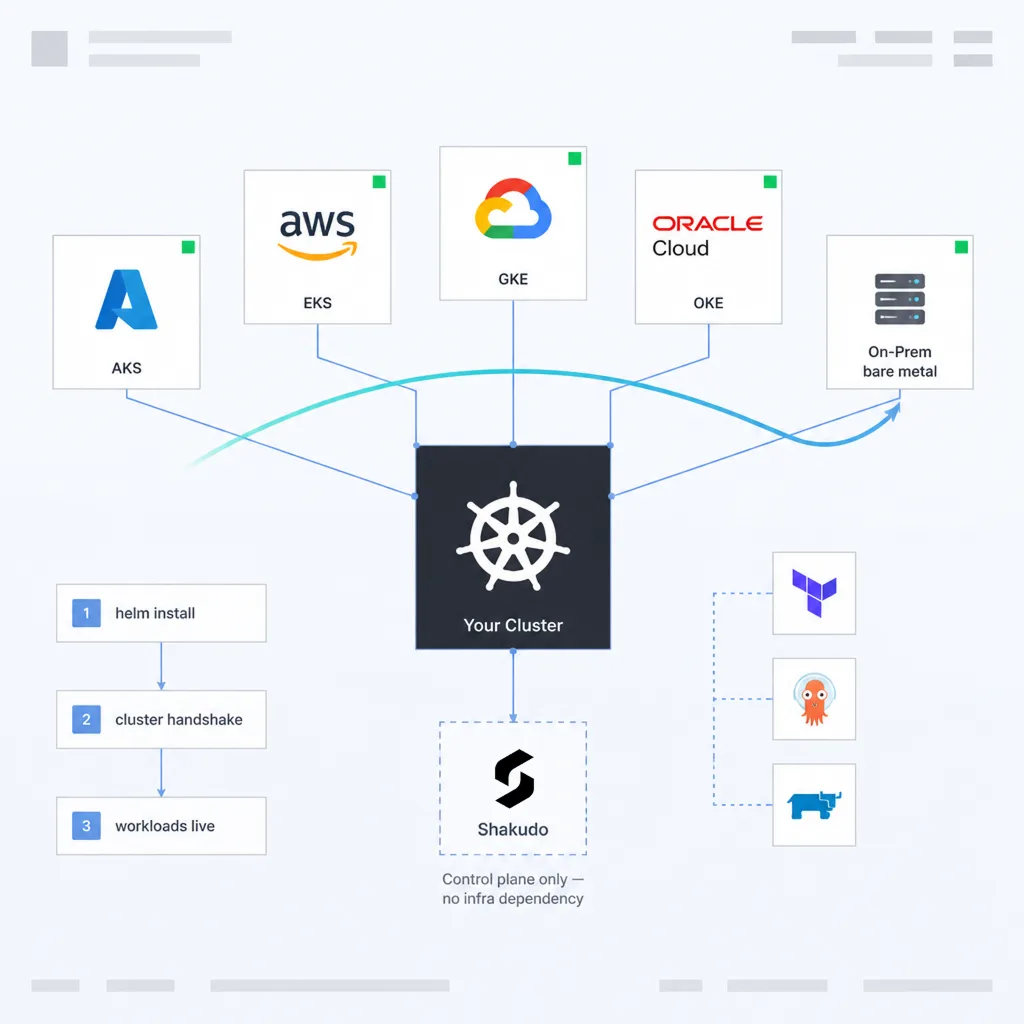
Deploy Wherever Kubernetes Exists
IN YOUR PERIMETER

Isolation Without Giving Up Hosted Models

Run fully air-gapped with self-hosted models, or run in your own cloud account and enable hosted models deliberately. Platform data, credentials, and logs stay inside your boundary either way, and each hosted call is made on your own provider contract.

See details →
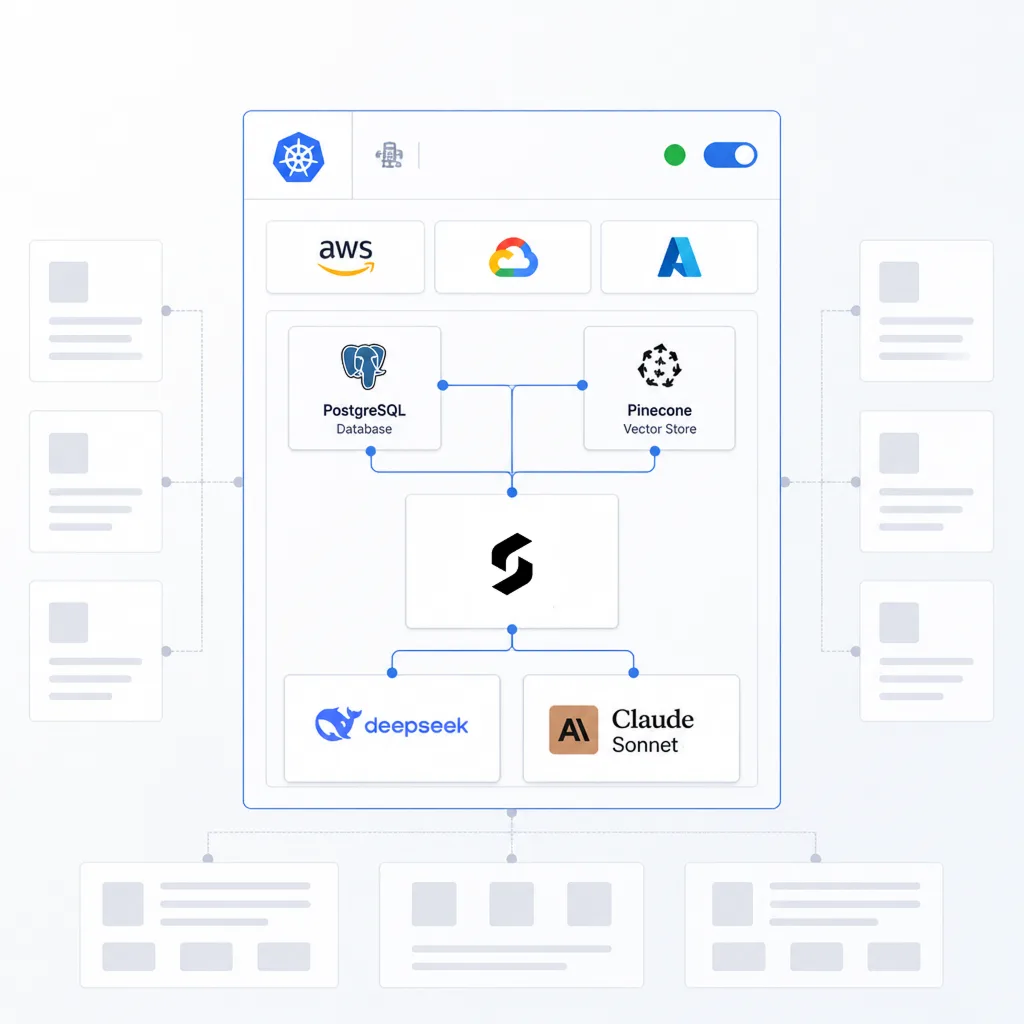
Isolation Without Giving Up Hosted Models

Shakudo vs. Vertex AI

Shakudo

A platform in your infrastructure, on any cloud

  • 300+ components plus Vertex AI models, other providers, or open-weight models you host
  • Runs in your infrastructure: Google Cloud, AWS, Azure, on-premises, or air-gapped
  • Your own cloud rates and model contracts, with no per-seat platform license
  • Swap the model without rewriting the applications around it
  • Operational in 2-4 weeks on Kubernetes you already run
Other platforms

A managed ML platform on Google Cloud

  • Catalog limited to the models Google serves, and to the regions Google serves them in
  • Prompts and outputs stay in your Google Cloud project, but the platform layer above them is Google-managed
  • Per-token pricing and quotas set by Google, with commitments negotiated through Google
  • Leaving Vertex AI means re-integrating the models and the pipelines built around them
  • Regions and topology follow Google’s footprint; on-premises means a separately contracted distributed-cloud deployment

We needed a platform that gives our teams the freedom to use the best tools available while maintaining the governance and oversight that a company of our scale requires. Shakudo delivers exactly that.

Charu Pujari
Senior Vice President, Engineering and AI
Loblaw Companies
2,400+
Retail locations
220,000+
Employees

Frequently Asked Questions

How is Shakudo different from Vertex AI?
Google Vertex AI is a managed ML platform: it trains and serves models inside your Google Cloud project and handles the serving layer for you. Shakudo is the platform that sits around and underneath that choice. It runs in your own infrastructure, integrates 300+ components for data and ML, and treats the model catalog as one swappable part. A Vertex AI model remains reachable through the platform on the Google Cloud agreement you already hold, and it sits next to models from other providers and open-weight models you host, so the managed ML service is a component rather than the foundation.
What stays in our environment, and what leaves it?
Platform data stays in your environment: prompts, embeddings, outputs, credentials, and logs are stored in your own databases and object storage, inside infrastructure you run. There is no Shakudo-hosted data plane holding a copy. The one deliberate exception is a hosted model call: when a workflow calls Vertex AI or another hosted provider, that request goes to that provider under your own contract, with zero retention and no training on your inputs. Self-hosted open-weight models stay entirely inside your boundary, including in air-gapped deployments.
Can we keep using Vertex AI models?
Yes. Shakudo is not a replacement for the models; it is the platform that reaches them. A Vertex AI model can be called through the platform on the Google Cloud agreement you already hold, alongside AWS Bedrock, Azure OpenAI, or open-weight models you host, with one identity, policy, and audit layer across all of them. That also means migration is workload by workload: adopt the platform for a new workload first, then move existing pipelines when each one is ready, with the current stack still running beside it.
How long does implementation take?
Most enterprise customers are operational within 2-4 weeks. Shakudo deploys on Kubernetes you already run and connects to your identity provider, so the work is integration rather than migration: existing pipelines keep running while workloads move over.
What does pricing look like?
Pricing is based on your deployment scale and requirements. We work with enterprises of all sizes. The best way to understand pricing for your use case is to request a pricing overview through the form above.
What security attestations does Shakudo hold?
Shakudo holds SOC 2 Type II. A copy of the report is available under NDA on request. Because the platform runs in your infrastructure, its controls sit inside your own audit boundary rather than behind a vendor tenancy, and platform data residency is a deployment property you configure rather than a vendor commitment you rely on.

Keep Your Vertex AI Models. Run the Platform in Your Own Environment.

Request Pricing

Trademark Disclaimer: All third-party trademarks, logos, and brand names displayed on this website are the property of their respective owners. Any company, product, or service names used on this website are for identification and compatibility purposes only. Reference to these names, logos, or brands does not imply endorsement, sponsorship, partnership, certification, or affiliation with Shakudo, unless expressly stated.