Trusted by the best








 REQUEST PRICING
Shakudo runs the AI platform inside your own infrastructure, with a swappable model catalog and portability across Azure, AWS, GCP, and on-premises. Calls to a hosted model still go to that provider, under your own contract, with zero retention and no training on your data.
Quick overview of pricing, features, and deployment options.
Azure AI Foundry is a capable managed environment: a curated model catalog, evaluation tooling, agent services, and integration with the rest of Azure. What it does not do is let the platform layer exist anywhere except where Azure runs it, or let the catalog contain anything Microsoft has not listed for your region. Those are separate decisions from the model choice, and they bind harder with every application built on top.
Shakudo integrates 300+ components and treats the model catalog as a swappable layer. Route a request to an Azure OpenAI model, a model on another cloud, or an open-weight model you host yourself, without rewriting the applications around it.
The platform runs on Kubernetes you already operate, so the target is a deployment choice rather than an architecture decision. Azure, AWS, GCP, your own data center, or an air-gapped network, with one identity, policy, and audit layer across them.
Prompts, embeddings, outputs, credentials, and logs are stored in your own databases and object storage, inside infrastructure you run. There is no Shakudo-hosted data plane holding a copy. A call to a hosted model goes to that provider under your own contract, with zero retention and no training on your inputs.
Integration, deployment, and isolation are platform defaults, so the model service becomes one component instead of the foundation.
Ingestion, transformation, orchestration, ML training, model serving, and BI managed through a single platform. The pipeline that feeds your models lives next to the models, rather than in services your data team has to reach across vendors to assemble.
See details →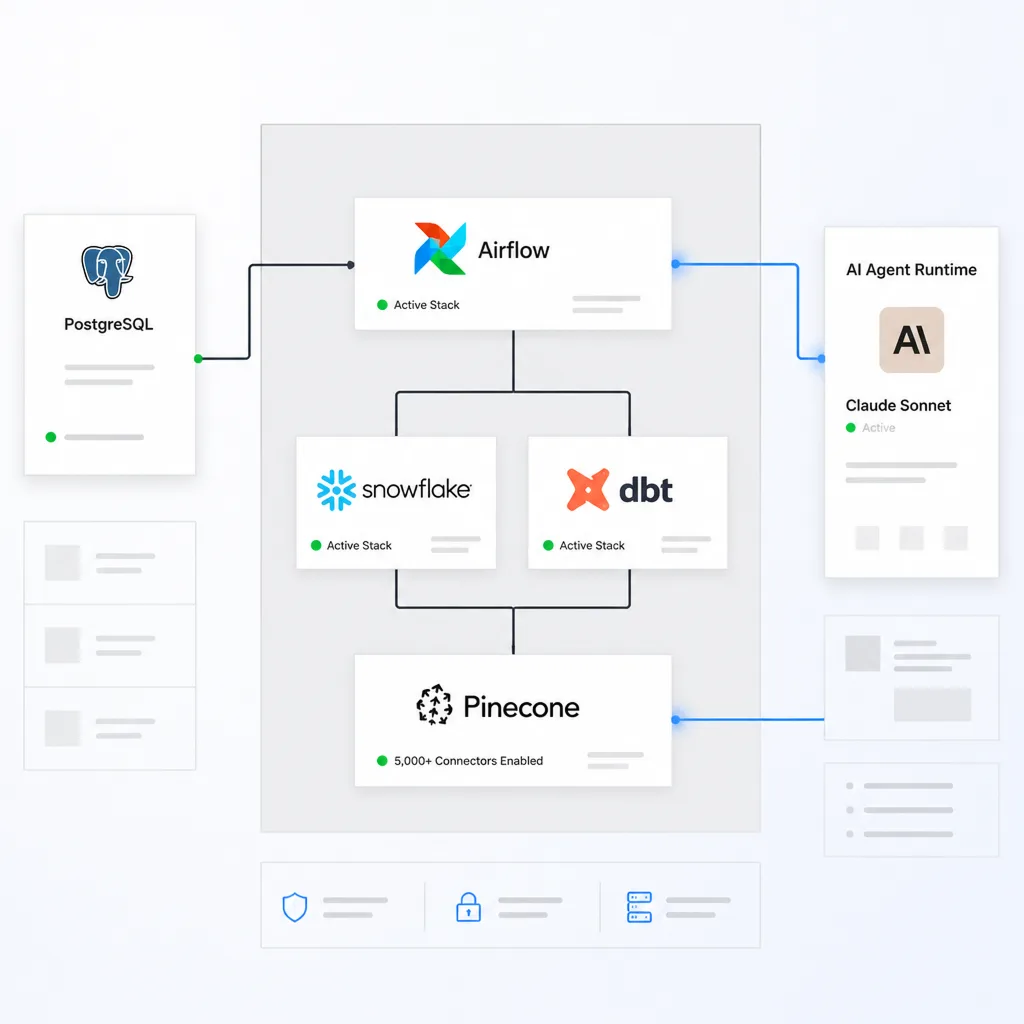
Azure, AWS, GCP, or your own data center. Models reached through Azure AI Foundry sit side by side with models from other providers and open-weight models you host, under one consistent identity, policy, and audit layer. Moving clouds is a deployment change, not a rebuild.
See details →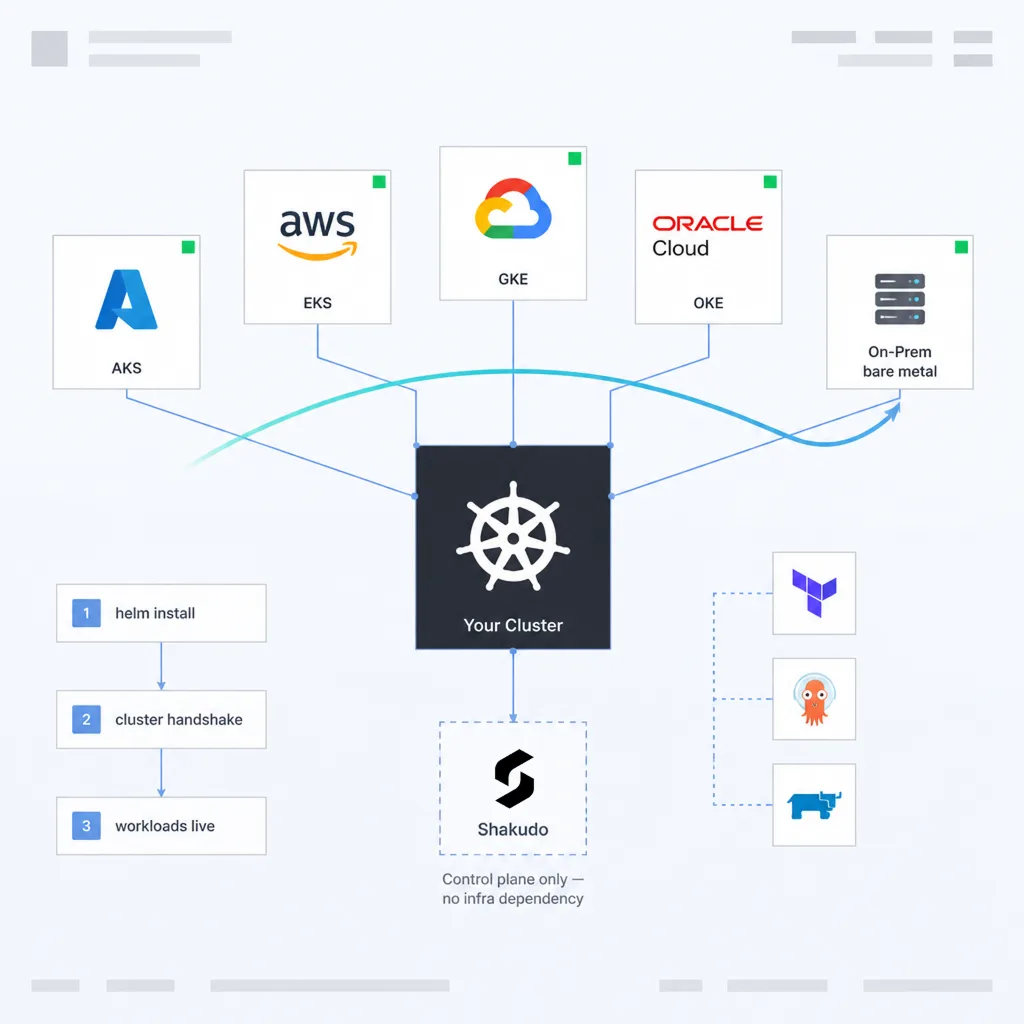
Run fully air-gapped with self-hosted models, or run in your own cloud account and enable hosted models deliberately. Platform data, credentials, and logs stay inside your boundary either way, and each hosted call is made on your own provider contract.
See details →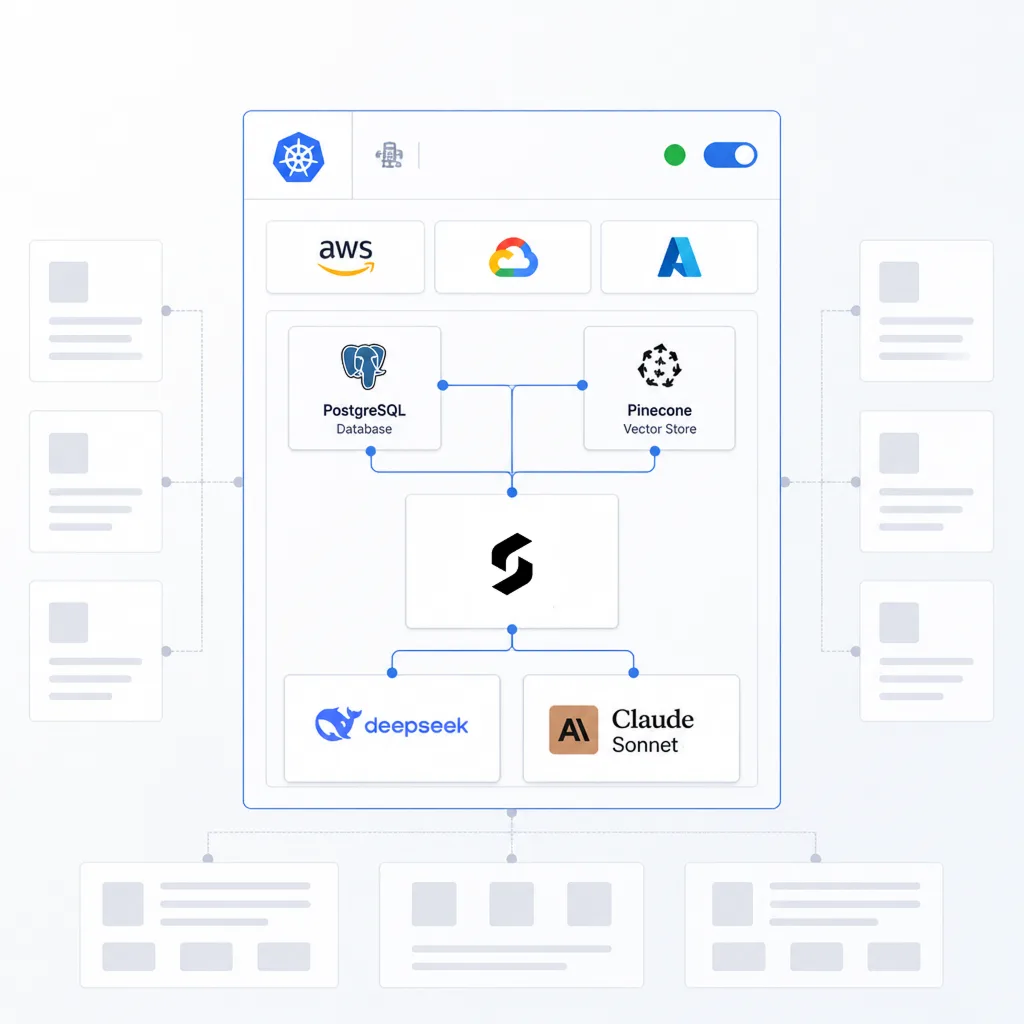
We’re an on-prem company because we didn’t want our data exposed to laws that we had no control over. Put it in the cloud and it may be subject to a different country’s legal framework and exposure to being opened at any time. The company made a decision to keep as much on-prem as possible, because then we had control over where that information ended up.
Trademark Disclaimer: All third-party trademarks, logos, and brand names displayed on this website are the property of their respective owners. Any company, product, or service names used on this website are for identification and compatibility purposes only. Reference to these names, logos, or brands does not imply endorsement, sponsorship, partnership, certification, or affiliation with Shakudo, unless expressly stated.
